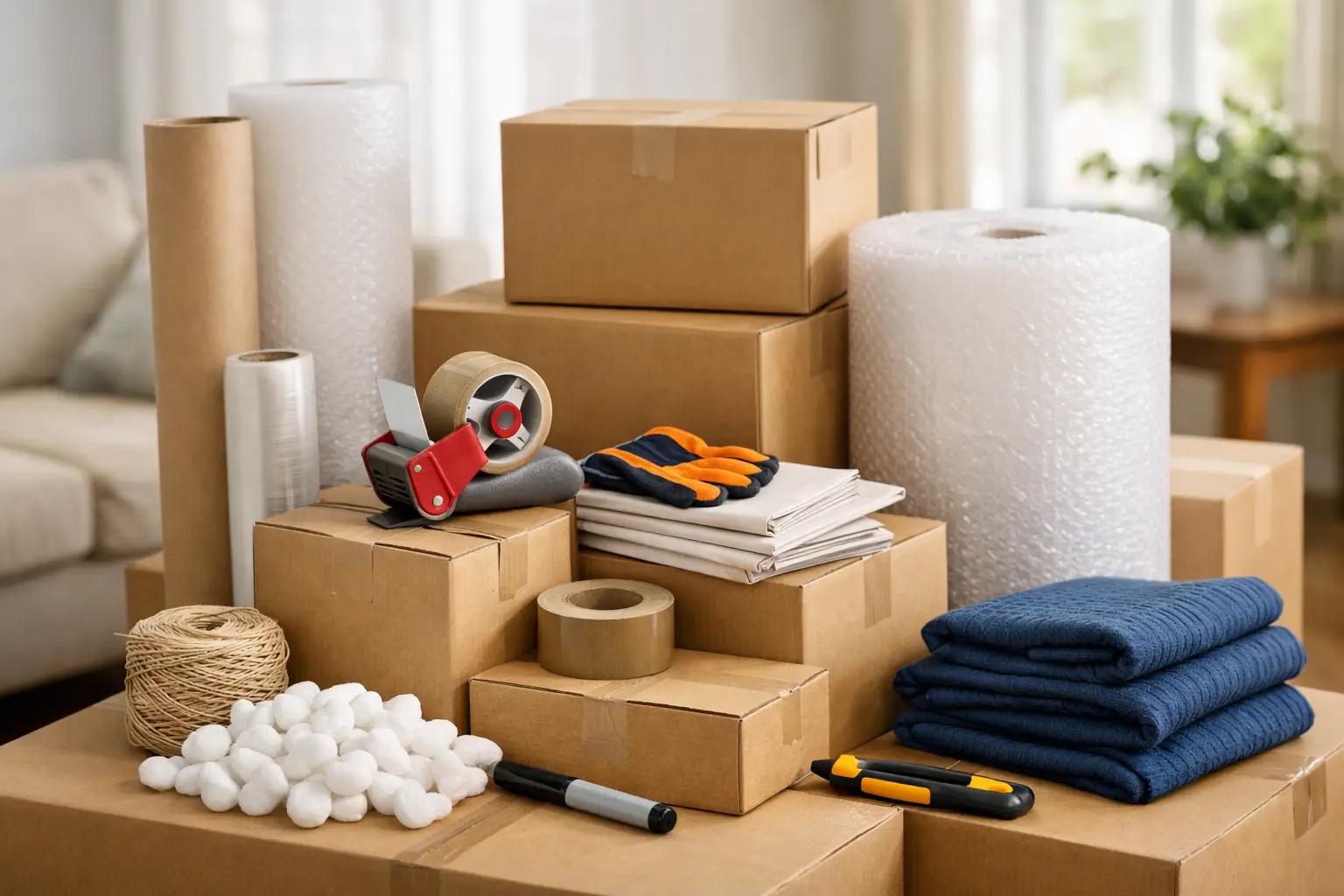
Best Moving Supplies for Packing Your Home
Find the best moving supplies for packing, from double-wall moving boxes to tape and wrap, so your home move stays protected, organised and on schedule.
A move can go wrong before the removals lorry arrives. A box that gives way on the stairs, a poorly wrapped television or loose cutlery rattling around in a kitchen carton can turn a routine job into damage, delays and extra expense. Choosing the best moving supplies for packing is not about buying every gadget available. It is about using the right materials for the items you own, packing them properly and making the move easier to unload at the other end.
For most home moves, quality boxes, strong tape and suitable protective wrapping do more than expensive specialist products. The difference is in how you match each supply to the job.
Best moving supplies for packing: start with the essentials
The core packing kit should protect your belongings, keep boxes manageable and help everyone identify what goes where. Cheap or unsuitable materials are a false economy when they split under weight or leave fragile items exposed.
Double-wall cardboard boxes
Double-wall boxes are the best all-round choice for a house move. They hold their shape, stack safely in a removals vehicle and are far less likely to collapse when carrying books, cookware or files. Use small boxes for heavy belongings and medium or large boxes for lighter, bulkier items such as bedding, cushions and clothing.
Avoid filling a large carton with books, tins or vinyl records. Even a strong box becomes difficult and unsafe to lift when overloaded. A good rule is that one person should be able to carry it without straining or needing to drag it across the floor.
Wardrobe boxes are useful when time matters. Clothes can stay on their hangers and go straight from wardrobe rail to wardrobe box, then back onto a rail at your new property. They cost more than standard cartons, so they are best reserved for suits, dresses, coats and clothing that creases easily.
Strong packing tape and a tape dispenser
Use proper parcel tape rather than masking tape, electrical tape or old rolls left in a drawer. Good-quality packing tape grips cardboard securely and stays put through lifting, stacking and changing temperatures. Seal the bottom of every box with several strips across the seam, then run tape along the side joins for heavy loads.
A handheld tape dispenser is a small purchase that saves time on a full packing day. It cuts tape cleanly and means you are not searching for the end of the roll while trying to hold a box closed.
Bubble wrap, packing paper and tissue paper
These materials do different jobs. Bubble wrap is best for delicate and breakable items, including mirrors, lamps, small appliances, framed pictures and glassware. Wrap each item individually, secure it with tape and make sure there is no movement inside the box.
Plain packing paper is more versatile and often better value for everyday breakables. It can be scrunched into the base of boxes, wrapped around plates and used to fill gaps. Pack plates vertically rather than flat where possible, with paper between every piece. This reduces pressure across their widest surface.
Avoid wrapping items directly in newspaper if you can. Ink can transfer onto crockery, upholstery and hands, particularly in damp conditions. Tissue paper is useful for especially delicate finishes, ornaments and polished surfaces, but it is not a replacement for padding around the item.
Stretch wrap, furniture covers and mattress bags
Stretch wrap protects drawers and keeps cupboard doors closed during transport. It is also useful for bundling awkward items, such as loose bed slats or dismantled furniture components. Do not apply it tightly to unfinished wood, leather or delicate painted surfaces for long periods, as trapped moisture or pressure can cause marks. Put a protective layer of paper, cloth or a cover underneath first.
Reusable furniture covers or removal blankets offer much better protection for sofas, armchairs and wooden furniture than a thin plastic sheet. Mattress bags keep mattresses clean when they are carried through hallways, placed in a vehicle or set temporarily on the ground. Choose the correct size and tape any open edge carefully after the mattress is inside.
Labels and permanent markers
Clear labelling saves time, especially when several people are unloading. Write the destination room on at least two sides of each box, not just the top. Add a short description such as “Kitchen - mugs and glasses” or “Main bedroom - winter clothes”.
Mark fragile boxes clearly, but do not rely on a label alone to protect them. A carton marked “Fragile” still needs enough internal padding, a sensible weight and careful stacking. Numbering boxes can also help you check that everything has arrived before the team leaves.
The supplies that prevent common packing problems
Some packing supplies are not needed for every move, but they are worth having for specific belongings. If you are packing a typical two- or three-bedroom property, keep these items available rather than improvising on moving day:
- Heavy-duty bin bags for duvets, soft toys, cushions and last-minute loose items.
- Zip bags for screws, bolts, remote controls and furniture fittings.
- Marker labels or coloured stickers to identify rooms quickly.
- Corner protectors for mirrors, framed artwork and glass table tops.
- Removal blankets for furniture, appliances and awkward items with hard edges.
- A box cutter or safety knife for opening cartons after the move.
Zip bags deserve particular attention. When dismantling a bed, desk or shelving unit, place all fittings in one labelled bag and tape it securely to a visible part of the furniture. Do not leave screws loose in a drawer or assume they will be found later.
For televisions, monitors and computers, the original packaging is ideal if you still have it. If not, use a correctly sized box, plenty of bubble wrap and rigid cardboard around the screen. Never lay an unprotected screen beneath heavier household boxes.
How many boxes and materials do you need?
The amount depends on how much you own, how long you have lived in the property and whether you are packing the loft, garage or shed as well. A lightly furnished one-bedroom flat may need 20 to 30 boxes. A family three-bedroom home can easily require 60 to 100 cartons once books, kitchenware, toys and storage areas are included.
It is usually better to order or collect slightly more than you expect. Running out of boxes late at night encourages poor packing, overfilled cartons and unsuitable substitutes. Keep a small supply aside for the final day, when chargers, toiletries, kettle items and bedding still need to be packed.
Do not overbuy specialist materials without checking what you are moving. Wardrobe boxes are practical, but not essential for every rail of everyday clothing. Bubble wrap is valuable for fragile items, while blankets and sturdy cartons may be more useful for the larger furniture pieces taking up most of the vehicle space.
Pack in the right order, not just the right materials
Start with rooms and possessions you will not need before moving day. Seasonal clothing, books, ornaments, spare linen and rarely used kitchen equipment can be packed early. Keep daily essentials separate until the final 24 hours.
Build each box with a padded base, pack similar items together and fill empty spaces so contents cannot shift. Heavy items go at the bottom, lighter items on top. Once full, close the box and test it gently. If it flexes, rattles or feels too heavy, repack it before sealing.
Prepare one clearly labelled essentials box for the first evening. Include a kettle, tea or coffee, mugs, phone chargers, medication, basic cleaning supplies, toilet roll, snacks and important documents. Keep valuables, keys and paperwork with you rather than in the removals vehicle.
When professional packing is the better option
Buying supplies and packing yourself can reduce the cost of a move, particularly if you have time and only a modest amount to pack. It is less suitable when you are moving at short notice, handling fragile collections, balancing work and family commitments or relocating a busy office.
A professional packing service brings the materials, experience and pace needed to prepare a property properly. It can also reduce the risk of poorly packed boxes delaying the move. HomeGo Removals & Packing Ltd can provide practical packing support alongside fully insured removals, which is useful when you need one team to manage the physical work from packing through to delivery.
Pack room by room, use materials that suit the item rather than the cheapest option, and keep every box liftable. That approach gives your belongings the best chance of arriving in the same condition they left - and makes the first hours in your new home far easier.
Get a free fixed written quote in 2 mins
Insurance up to £50,000 included · No cancellation fees · Free dismantling & reassembly

Our team of fully-insured removal specialists helps families across Slough, Windsor, Maidenhead and the wider Berkshire area move home every week. We pack, load, drive and unload boxes every day — every guide on this blog comes from real jobs, not theory.
Reviewed & fact-checked by Allah Nazar Ihsan — Founder & Managing Director, HomeGo Removals & Packing Ltd
Planning your move?
Get a free, no-obligation written quote from Berkshire's trusted independent removers. We're answering the phone right now — 24 hours a day, 7 days a week.