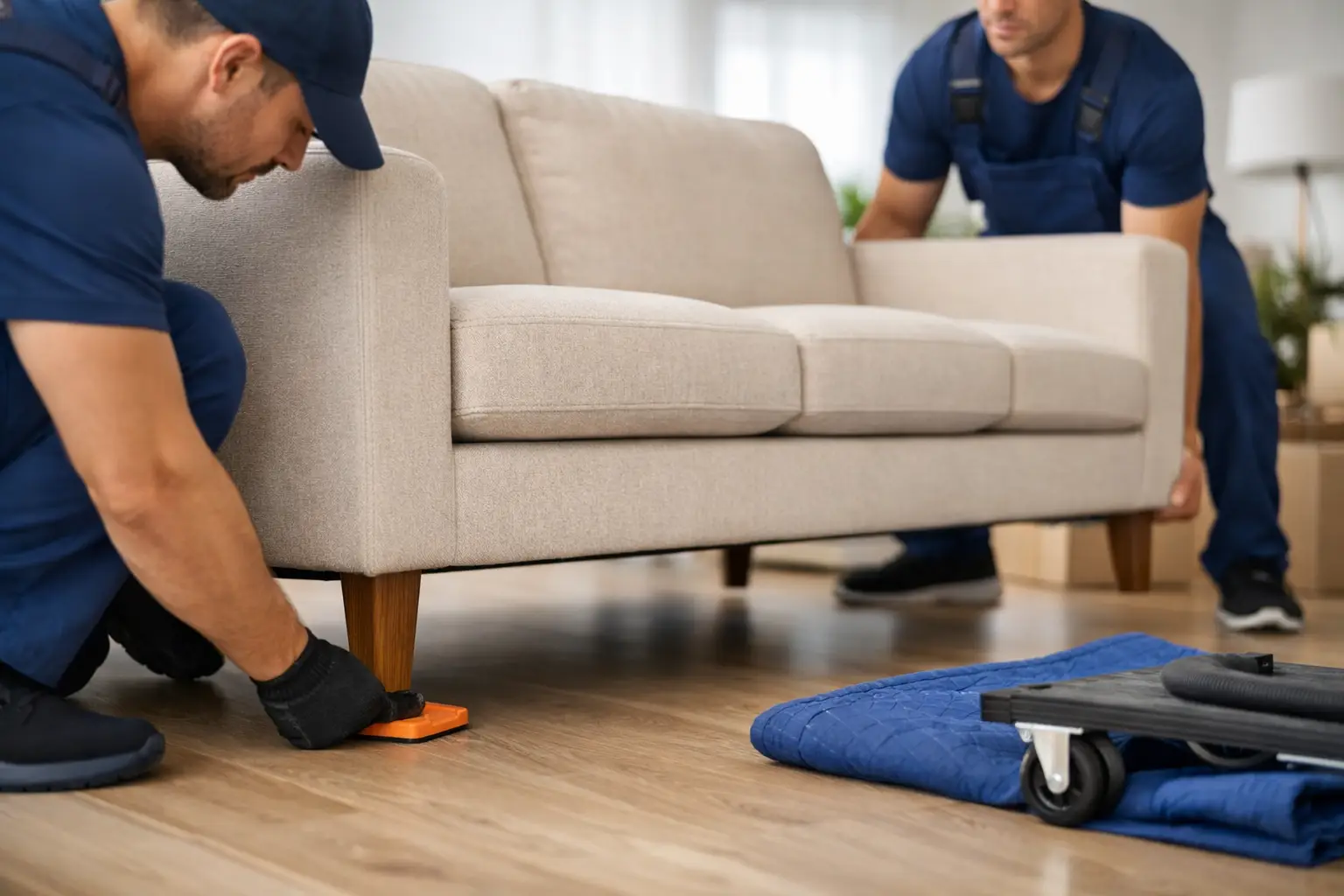
Best Way to Move Furniture Without Damage
Find the best way to move furniture safely and efficiently, from lifting and packing tips to when hiring insured movers saves time and cost.
A wardrobe stuck on a staircase can turn a straightforward move into a long, expensive day. The best way to move furniture is not about brute force. It is about planning, protecting the item, protecting the property, and knowing when a professional team will save you more than it costs.
Furniture is awkward for a reason. Weight is rarely balanced, corners catch on walls, and even a short move across town can leave sofas scuffed, drawers cracked or backs strained. If you want a move to stay on schedule, every large item needs a clear method before it is lifted.
What is the best way to move furniture?
For most households and small office moves, the best way to move furniture is to measure first, disassemble where sensible, wrap properly, use the right lifting equipment, and load in the correct order. That sounds simple, but each step matters.
If you skip measuring, you can end up forcing a bed frame through a doorway it will never fit through. If you skip wrapping, polished wood, glass tops and fabric corners take the damage. If you skip disassembly, you carry more weight than necessary and increase the chance of scraping walls, bannisters and door frames.
There is also a practical point many people miss. The cheapest option is not always doing it yourself. If the move involves upper floors, tight access, heavy wardrobes, office desks, or same-day timing, an insured removals team can be the more efficient and lower-risk choice.
Start with access, not the furniture
Before you touch a single item, check the route. Measure the furniture, then measure doorways, hallways, stair turns, lift access and the vehicle space. This is where most delays begin.
Take doors off hinges if needed. Move rugs, shoe racks, side tables and anything else that narrows the path. Protect vulnerable flooring with coverings if the route includes timber, laminate or freshly cleaned carpets.
For flats and office buildings, access rules matter as much as lifting technique. Check booking slots for lifts, parking restrictions, loading bay access and entry times. A well-packed van is no use if the building only allows collections between certain hours.
Disassemble anything that makes sense
The best way to move furniture often involves making it smaller first. Beds, dining tables, wardrobes, desk units and some sofas are much safer to move in sections.
Remove legs from tables and sofas where possible. Take shelves, mirrors and glass panels out of larger pieces. Empty drawers from chests and wardrobes to reduce weight. Keep fittings in labelled bags and tape them securely to the relevant item, or pack them in one clearly marked box.
Not everything should be taken apart. Some older furniture becomes less stable once dismantled, and some flat-pack units do not survive repeated assembly well. If a piece feels fragile, loose at the joints or unusually heavy for its size, that is often the point where professional handling makes more sense.
Use the right materials, not just spare blankets
Blankets help, but they are not a complete packing system. Different furniture needs different protection.
Upholstered items should be wrapped to keep dust, marks and moisture off the fabric. Wooden furniture benefits from padded protection around edges and corners. Glass needs rigid support and clear labelling. Mattresses should be covered properly rather than loaded loose into a van.
Tape should never go directly onto polished wood, painted finishes or delicate surfaces. It can lift the finish or leave residue that is harder to remove than most people expect. Stretch wrap, padded covers and corner protectors do more to prevent damage than improvising with household materials.
This is one reason packing services are often worthwhile. Large furniture is expensive to replace, and proper wrapping usually costs less than repairing one dented table top or torn sofa arm.
Lift smart or do not lift at all
Heavy furniture injuries happen quickly. One poor lift can put someone out of work for days or weeks. If an item is too large, too heavy or too awkward to control, stop and reassess.
Lift with your legs, keep the load close to your body and avoid twisting while carrying. Move slowly and communicate clearly if two or more people are involved. One person should call the turns, pauses and set-down points.
Sliders, dollies and straps can make a major difference, especially for washing machines, filing cabinets, solid wood chests and commercial furniture. They reduce strain and give you more control in tight spaces.
There is a limit, though. Tall wardrobes, American-style fridge freezers, piano-sized items and oversized corner sofas are not sensible trial-and-error jobs. They require experience, enough trained hands and the right vehicle loading plan.
The best way to move furniture into a van
Loading order matters almost as much as lifting. The heaviest and largest items usually go in first, placed upright where appropriate and secured so they cannot shift in transit. Sofas, mattresses, wardrobes and appliances create the structure of the load. Boxes, cushions and lighter items fill protected gaps.
Furniture should not be packed so tightly that pieces rub against each other for the whole journey. Equally, it should not be left loose enough to slide when the driver brakes. Good loading is about balance, spacing and restraint.
This is where many DIY moves go wrong. People focus on getting everything into the van, not on what happens during the drive. A short journey through Reading, Slough or Maidenhead with stop-start traffic and roundabouts can do just as much damage as a long-distance move if the load is not secured properly.
When doing it yourself works well
A DIY approach can work if the move is small, access is easy, the furniture is not especially valuable, and you have enough capable help. Ground-floor collections, short-distance flat moves with minimal bulky furniture, and single-item transport are often manageable with the right van and basic equipment.
It also works better when timing is flexible. If you can make more than one trip, take your time dismantling properly and avoid peak traffic, you have more room for error.
The trade-off is effort and risk. You will need to source packing materials, arrange lifting help, handle loading yourself and cover any damage if something goes wrong. That is manageable for some moves, but not all.
When hiring movers is the better option
If time matters, access is awkward or the furniture has real value, professional removals are usually the best way to move furniture. The same applies if you are moving an office, clearing a rental property, relocating at short notice or dealing with assembly and reassembly on the same day.
A proper removals service gives you more than transport. You get a planned move, trained handling, suitable equipment, insured cover and a team used to difficult access and heavy loads. Fixed-price quotes matter here as well. They remove the uncertainty that often puts people off booking help in the first place.
For customers balancing work, family schedules and tenancy deadlines, that certainty is often worth more than the van itself. HomeGo Removals & Packing Ltd is built around that practical gap - fixed prices, fully insured moves, same-day slots and support with packing or furniture assembly where needed.
Common mistakes that cause damage
Most furniture damage comes from the same handful of errors. People rush the job, underestimate the weight, skip proper wrapping, or assume that two strong people can manage anything. They also leave drawers full, fail to measure stairwells, and stack vans based on convenience rather than safety.
Weather is another issue. A sofa carried unwrapped in light rain can pick up water marks. Timber furniture left standing outside while the van is rearranged can swell or stain. If conditions are poor, speed and protection matter even more.
There is also the problem of partial planning. Many people think about getting furniture out of the old property, but not into the new one. If the destination has tighter stairs, different parking, or narrower turns, the second half of the move becomes the real problem.
A practical rule for deciding
If the item is valuable, oversized, difficult to dismantle, awkward on stairs, or likely to need more than two people, do not treat it as a casual lifting job. That is usually the point where hiring help becomes the sensible option.
If the move is straightforward and you have the time, equipment and enough capable hands, a DIY job can be fine. Just be honest about the risks. Saving money only works if you avoid injury, delays and damage.
The best moves are rarely the ones done with the most effort. They are the ones done with the least friction. Measure properly, protect everything, do not force heavy items through tight spaces, and if the job starts looking bigger than expected, get it handled properly before a simple move turns into a costly one.
When furniture is moved the right way, the day stays on track and the item arrives ready to use, not ready to repair.
Get a free fixed written quote in 2 mins
Insurance up to £50,000 included · No cancellation fees · Free dismantling & reassembly

Our team of fully-insured removal specialists helps families across Slough, Windsor, Maidenhead and the wider Berkshire area move home every week. We pack, load, drive and unload boxes every day — every guide on this blog comes from real jobs, not theory.
Reviewed & fact-checked by Allah Nazar Ihsan — Founder & Managing Director, HomeGo Removals & Packing Ltd
Planning your move?
Get a free, no-obligation written quote from Berkshire's trusted independent removers. We're answering the phone right now — 24 hours a day, 7 days a week.