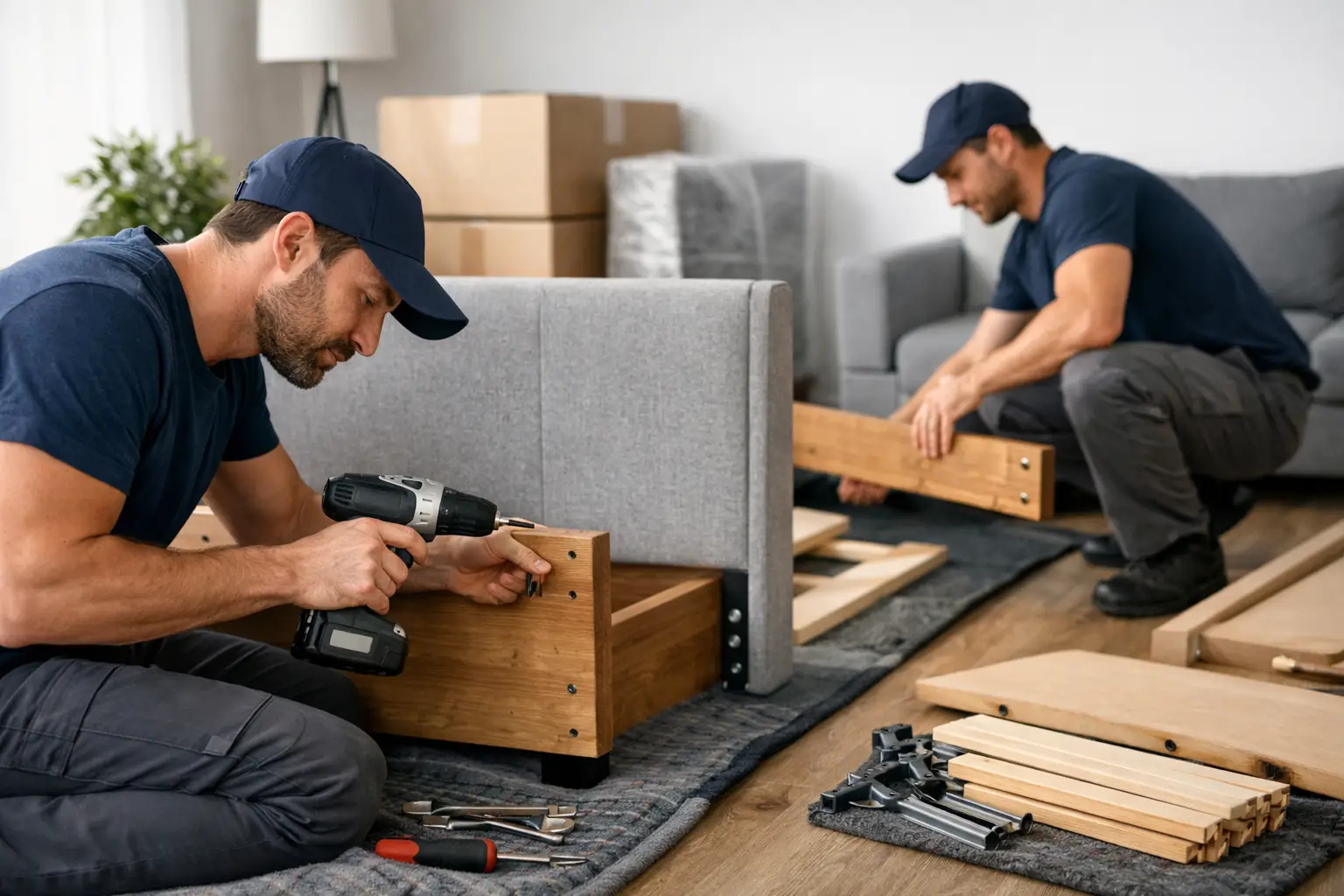
Furniture Dismantling Service Explained
A furniture dismantling service helps make moving safer, faster and less stressful with insured handling, careful packing and reassembly support.
That wardrobe that went upstairs in pieces ten years ago rarely comes back down in one. The same goes for large desks, bed frames, corner sofas and bulky shelving. A furniture dismantling service solves that problem before moving day turns into delays, damaged walls or a mattress stuck in the hallway.
For many moves, dismantling is not an extra. It is what makes the move possible. Tight staircases, narrow landings, awkward loft conversions and blocks of flats with small lifts can stop a straightforward removal in its tracks. Getting furniture apart properly, keeping fixings safe and rebuilding everything at the other end saves time and avoids expensive mistakes.
What a furniture dismantling service actually covers
A proper furniture dismantling service is more than turning up with a screwdriver. It usually starts with identifying which items need to come apart for safe access, loading and transport. Beds, wardrobes, dining tables, office desks, shelving units and some sofas are common examples.
The job then involves taking those pieces apart in a controlled order, protecting panels and frames, and keeping screws, bolts, brackets and fittings together so reassembly is straightforward. If the move includes packing, those dismantled parts can also be wrapped and labelled so there is less confusion at the new property.
Some items do not need full dismantling. A table may only need its legs removed. A wardrobe may need doors, shelves and rails taken out while the main carcass stays intact if access allows. This is where experience matters. Overdoing it wastes time. Not doing enough creates handling problems later.
Why it matters on moving day
The biggest benefit is practical. Large furniture becomes safer to carry, easier to protect and far less likely to catch door frames, scrape bannisters or damage plasterwork. That matters whether you are moving from a terrace in Reading, a flat in Slough or a small office with limited lift access.
It also affects timing. Moves often run late because furniture was assumed to fit. When it does not, everything stops while tools are found, fixings go missing and people try to work out how the piece was built in the first place. A planned dismantling service removes that guesswork.
There is also a safety point. Heavy wardrobes and bed frames can twist under strain when carried fully assembled. That puts pressure on joints, increases the risk of injury and can leave the item weaker even if it arrives looking fine. Taking furniture apart first is usually the safer option for both the movers and your belongings.
Which items usually need dismantling
Beds are one of the most common. Divan bases may separate easily, but wooden and metal frames often need partial dismantling to get through doors and down stairs. Wardrobes are another regular issue, especially modern flat-pack units that are tall, wide and not built to be moved assembled.
Desks and office furniture also come up often in business relocations. Cable-managed desks, meeting tables and storage units can be awkward to shift without dismantling, particularly if a building has access restrictions or fixed move-out times.
Sofas depend on the design. Many go out whole, but some corner sofas, sofa beds and oversized recliners need sections removed. Dining tables, bookcases, nursery furniture and garden items can also be included when access is tight or space in the vehicle needs to be used efficiently.
Furniture dismantling service before a house move
For home moves, this service works best when it is planned in advance rather than requested after the crew arrives. A quick list of large items gives the removals team a better idea of labour, tools and vehicle space. It also makes quoting more accurate, which helps if you want a fixed price and no surprises on the day.
This is particularly useful if you are moving out of a property with difficult access. Narrow Victorian staircases, shared entrance halls, top-floor flats and converted properties all create handling limits. In those cases, dismantling is often the difference between a smooth move and a long day.
If you are packing yourself, it also helps to know what will be taken apart so you can empty drawers, remove loose shelves and clear the area around each item. Small preparation steps save a lot of time once the move starts.
Office moves and commercial furniture dismantling
Commercial moves are less forgiving on timing. If desks, storage units or reception furniture need dismantling, that work usually has to fit around access windows, building rules and staff schedules. Delays cost money, especially if the business needs to reopen quickly.
A furniture dismantling service for offices should be organised, fast and clearly scoped. Not every item needs to be rebuilt immediately, but key workstations, meeting room furniture and essential storage usually do. That is one reason businesses often prefer an end-to-end team that can dismantle, move and reassemble without handing the job between separate contractors.
What to look for when booking the service
Start with clarity. Ask which items are included, whether reassembly is part of the price and what happens if a piece is already damaged or unstable. A dependable removals company should be straightforward about what is possible and where the risks are.
Insurance matters as well. So does pricing. If dismantling is treated as a vague add-on, costs can drift. Fixed-price quotes are useful because they tell you where you stand before the move begins.
Availability is another practical point. Some customers only realise they need dismantling when a landlord inspection is booked, keys are due back or a buyer is collecting furniture that day. Same-day or short-notice support can make a real difference in those situations.
The trade-off with flat-pack and older furniture
Not every item should be dismantled. That is the honest answer. Some older flat-pack furniture weakens every time it is taken apart. Chipboard panels can split, cam locks can loosen and pre-drilled holes can wear. If a unit is already unstable, moving it in sections may still be the right call, but it needs careful handling and realistic expectations.
Solid wood furniture is usually more forgiving, although it can be heavier and more awkward. Bespoke or high-value items may need a slower approach, extra protection or specialist handling. This is where a quick phone call and a few photos can help decide the best method before anyone starts unscrewing parts.
How to prepare for dismantling day
You do not need to do much, but the basics help. Empty the furniture fully. Keep children and pets away from the work area. Make sure there is enough floor space around the item to lay parts down safely.
If there are known issues, mention them early. Perhaps a wardrobe door sticks, a bed frame has a missing bolt or a desk was assembled in the room and may not fit out intact. That sort of detail helps the team plan properly and avoid delays.
It is also worth setting aside anything you need first at the new place. If your bed is being dismantled and rebuilt, keep bedding, chargers, medication and overnight essentials separate so you are not searching through boxes at the end of a long day.
Why customers often bundle dismantling with removals and packing
The simplest moves usually have one thing in common: one team handles the lot. Packing, dismantling, loading, transport and reassembly all connect. If those jobs are split between different providers, timing gaps and responsibility issues can creep in.
That is why many customers choose a company that can manage the full process. HomeGo Removals & Packing Ltd works this way for exactly that reason. It keeps the move more efficient, gives customers a clearer price upfront and reduces the usual back-and-forth when something needs doing quickly.
Is a furniture dismantling service worth it?
If the item is bulky, access is tight, or you simply do not want the risk of doing it yourself, yes, it usually is. The cost of professional dismantling is often far lower than the cost of damaged furniture, marked walls, lost fittings or a move that overruns by hours.
It is not always essential for every chair, table or shelf. Sometimes a few pieces can stay assembled. Sometimes only the largest items need attention. That depends on the furniture, the property and the time available. A good removals team will tell you what is necessary and what is not, rather than adding work for the sake of it.
When a move has to run on time, furniture needs to be protected, and access is not straightforward, dismantling is one of those services that earns its place very quickly. A bit of planning at the start usually saves a lot of stress by the end of the day.
Get a free fixed written quote in 2 mins
Insurance up to £50,000 included · No cancellation fees · Free dismantling & reassembly

Our team of fully-insured removal specialists helps families across Slough, Windsor, Maidenhead and the wider Berkshire area move home every week. We pack, load, drive and unload boxes every day — every guide on this blog comes from real jobs, not theory.
Reviewed & fact-checked by Allah Nazar Ihsan — Founder & Managing Director, HomeGo Removals & Packing Ltd
Planning your move?
Get a free, no-obligation written quote from Berkshire's trusted independent removers. We're answering the phone right now — 24 hours a day, 7 days a week.