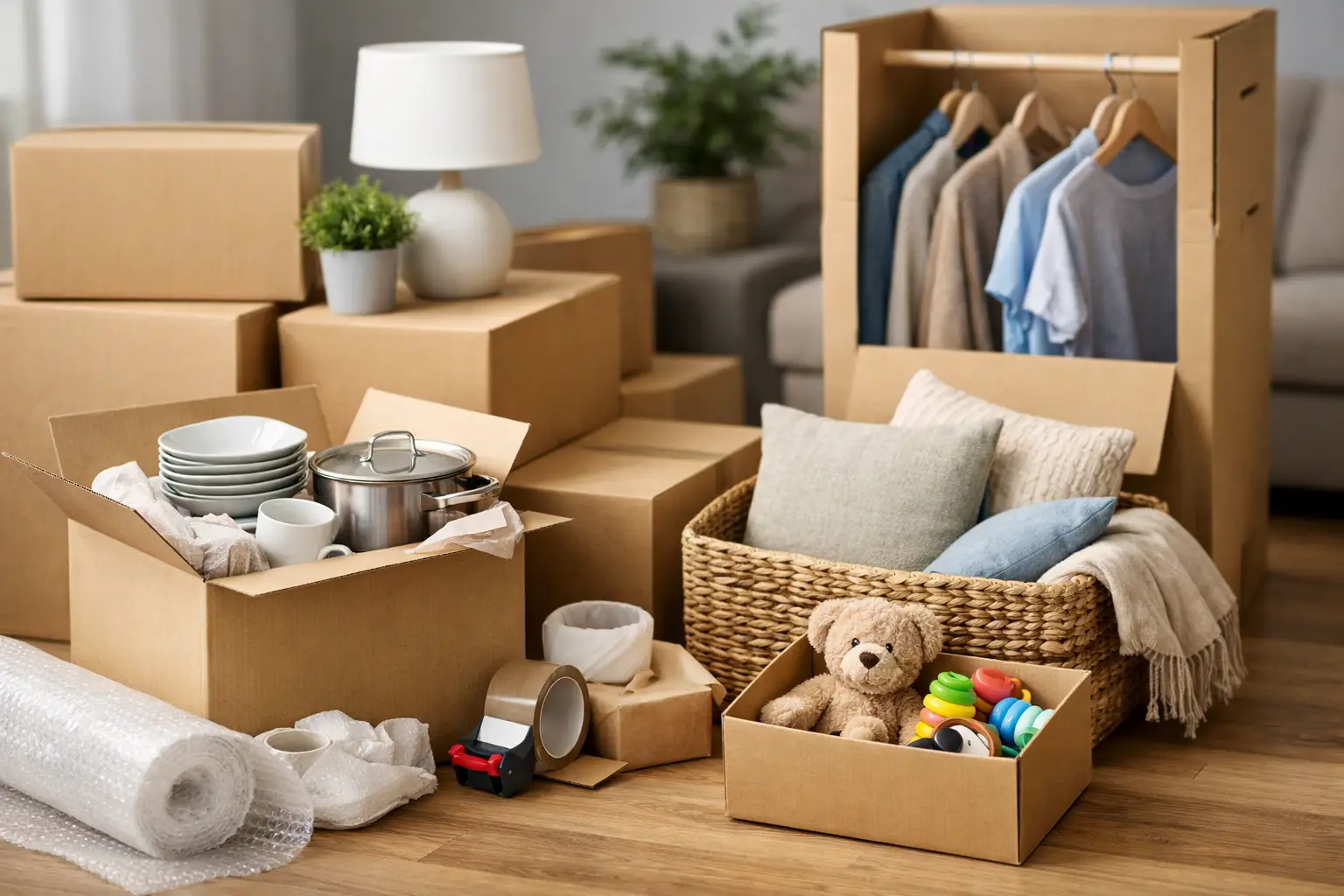
A Practical Guide to Packing Room by Room
Use this guide to packing room by room to protect belongings, label boxes clearly and make moving day across Berkshire and nearby areas far less stressful.
The last few days before a move are when good intentions usually turn into mixed boxes, missing chargers and a kitchen that cannot be used. A clear guide to packing room by room prevents that. It keeps related items together, protects what matters and makes unpacking far quicker once the removal lorry arrives.
The aim is not to pack every room in the same way. Books, bedding, glassware, cleaning products and electronics all need different handling. Start with the rooms you use least, leave daily essentials until last and give every box a clear destination.
Before you pack a single box
Get the right supplies first. Sturdy double-walled boxes are worth using for heavy or fragile belongings, while smaller boxes are better for books, tins and tools. You will also need strong packing tape, a marker pen, packing paper, bubble wrap and bin bags for soft items or rubbish.
Avoid overfilling large boxes. A box that is too heavy is difficult to carry safely and more likely to split. As a rule, use small boxes for dense items and larger boxes for lighter things such as duvets, cushions and lampshades.
Create one simple labelling system and stick to it. Write the destination room on the top and at least one side of every box, then add a short description such as “Kitchen - mugs and glasses” or “Main bedroom - winter clothes”. Mark fragile boxes clearly, but do not rely on the word alone: pack them properly and keep weight sensible.
Before packing each room, sort as you go. Moving unwanted items costs time, space and money. Put aside anything to sell, donate, recycle or dispose of, but be realistic about time. If your move is close, focus on obvious duplicates, broken items and things you have not used in years.
Guide to packing room by room
Work through the home in an order that causes the least disruption. Spare rooms, cupboards and decorative items can go first. Bedrooms and the kitchen usually need to stay functional until the final days.
Living room and dining area
Pack ornaments, frames, books and occasional-use electronics early. Wrap each fragile item individually in packing paper, fill gaps in the box and place heavier pieces at the bottom. Do not use newspaper directly against light-coloured ceramics or fabrics, as ink can transfer.
For televisions and monitors, the original box is ideal if you still have it. If not, use a correctly sized box, protect the screen with clean padding and keep it upright. Take a quick photo of cable connections before unplugging anything. Put remote controls, leads, brackets and small fittings into a labelled bag, then keep that bag with the related item.
Dining chairs should be wiped down and wrapped where necessary to prevent scuffs. Take apart large tables only if required for access or safe transport. Keep screws and fittings in a sealed, labelled bag taped securely to the underside of the furniture or placed in your essentials box.
Kitchen
The kitchen is often the slowest room to pack because it contains fragile items, awkward shapes and things you still need. Begin with rarely used serving dishes, speciality cookware, spare food containers and anything stored on high shelves.
Wrap plates individually and pack them on their edge rather than flat, using a small, strong box. Nest bowls with paper between them. Glasses should be wrapped one by one, with extra protection around stems and rims. Fill empty spaces so nothing can shift in transit.
Use cling film to keep cutlery trays together and tape cupboard doors shut only if the furniture is being moved and the surface will not be damaged. Check food dates before packing. Open packets, chilled food and frozen items are usually better used up, given away or discarded than moved.
Keep a small kitchen survival bag for the first day: mugs, tea or coffee, kettle, basic plates, cutlery, washing-up liquid, a cloth and easy food. It sounds minor, but it avoids opening ten boxes after a long moving day.
Bedrooms
Pack out-of-season clothes first. Clothes can stay on hangers if they are protected in wardrobe cartons or grouped carefully in clean bags, but loose shoes and accessories should go into labelled boxes. Do not make every clothing box too heavy.
Use bedding, towels and soft clothing as extra cushioning for non-fragile items where appropriate. Keep one set of bedding, nightwear, medication, chargers and a change of clothes separate for each person. If children are moving, pack a familiar toy, book or comfort item in their overnight bag rather than putting it on the lorry.
Empty drawers unless the furniture is lightweight and the drawers contain only light, non-breakable items. Heavy drawers can damage the unit or make it unsafe to lift. Remove mirrors from dressing tables where possible and wrap them separately.
Bathroom and utility room
Check every bottle for leaks. Tighten lids, place liquids in sealable bags and stand them upright in a lined box. Avoid packing bleach, aerosols, paint, fuel or other hazardous materials with household belongings. Ask your removals team in advance if you are unsure whether an item can travel.
Keep medication, prescriptions, contact lenses and important personal care items with you. The bathroom should be one of the last rooms packed, but spare toiletries, towels and unopened supplies can be boxed earlier.
In the utility room, drain appliances fully before moving them. Washing machines, dishwashers and tumble dryers may need transit bolts or professional disconnection. Do not leave this until the removal team arrives, especially if the move is booked for an early morning slot.
Home office, paperwork and electronics
Back up important files before disconnecting computers. Photograph cable layouts, label leads and keep chargers with the devices they belong to. Use original packaging where possible, or pack electronics in padded boxes with no room for movement.
Personal documents should not go into general removal boxes. Keep passports, driving licences, tenancy paperwork, house documents, bank information and valuables in a bag that stays with you. The same applies to keys, jewellery and small sentimental items.
Shred paperwork you no longer need instead of carrying it to the new property. For documents you must keep, use one clearly labelled file box so they can be found quickly if a solicitor, landlord or utility provider needs information during the move.
Garage, shed and loft
These spaces take longer than most people expect. Start early, particularly if you have tools, sports equipment, garden furniture or years of stored items. Clean muddy garden tools before packing and bundle long-handled items together securely.
Drain petrol-powered equipment and check which chemicals, gas bottles, paints and batteries require separate disposal. Do not put loose tools into a large box. Use smaller containers, protect sharp edges and keep the weight manageable.
Loft items are often dusty and easily forgotten. Label these boxes with more detail than “loft”, otherwise they may remain unopened for another five years. If something has survived untouched through several moves, it may be time to let it go.
Pack an essentials box for moving day
An essentials box should travel with you, not in the removal lorry. Include mobile phone chargers, keys, medication, wallet, documents, snacks, water, toilet roll, basic cleaning supplies, a first-aid kit and any tools needed for immediate furniture assembly.
If you are collecting keys later in the day, add a torch, portable power bank and simple refreshments. For a family move, separate overnight bags are often more useful than one large shared box. You may not have the energy to unpack properly on the first evening.
Make collection and delivery easier
Finish packing before the removals team arrives. Loose items, open drawers and unlabelled bags slow down loading and make it harder to check that everything has arrived. Keep pathways clear, reserve parking where needed and tell the team about access issues such as narrow stairs, lift restrictions or long walks from the property.
For moves across Berkshire, Greater London or nearby counties, traffic, parking and collection times can affect the day. A fixed plan helps, but clear communication matters just as much. Tell your mover about unusually large furniture, fragile items and anything requiring dismantling in advance.
HomeGo Removals & Packing Ltd can provide professional packing, furniture assembly and fully insured removal support when you need practical help rather than another job on the list. Fixed-price quotes and flexible booking can be especially useful for short-notice moves.
A well-packed home does not need to look perfect. It needs to be safe to lift, easy to identify and ready to unpack in the right order. Start with one room, label every box properly and leave yourself enough time for the jobs that cannot be rushed.
Get a free fixed written quote in 2 mins
Insurance up to £50,000 included · No cancellation fees · Free dismantling & reassembly

Our team of fully-insured removal specialists helps families across Slough, Windsor, Maidenhead and the wider Berkshire area move home every week. We pack, load, drive and unload boxes every day — every guide on this blog comes from real jobs, not theory.
Reviewed & fact-checked by Allah Nazar Ihsan — Founder & Managing Director, HomeGo Removals & Packing Ltd
Planning your move?
Get a free, no-obligation written quote from Berkshire's trusted independent removers. We're answering the phone right now — 24 hours a day, 7 days a week.