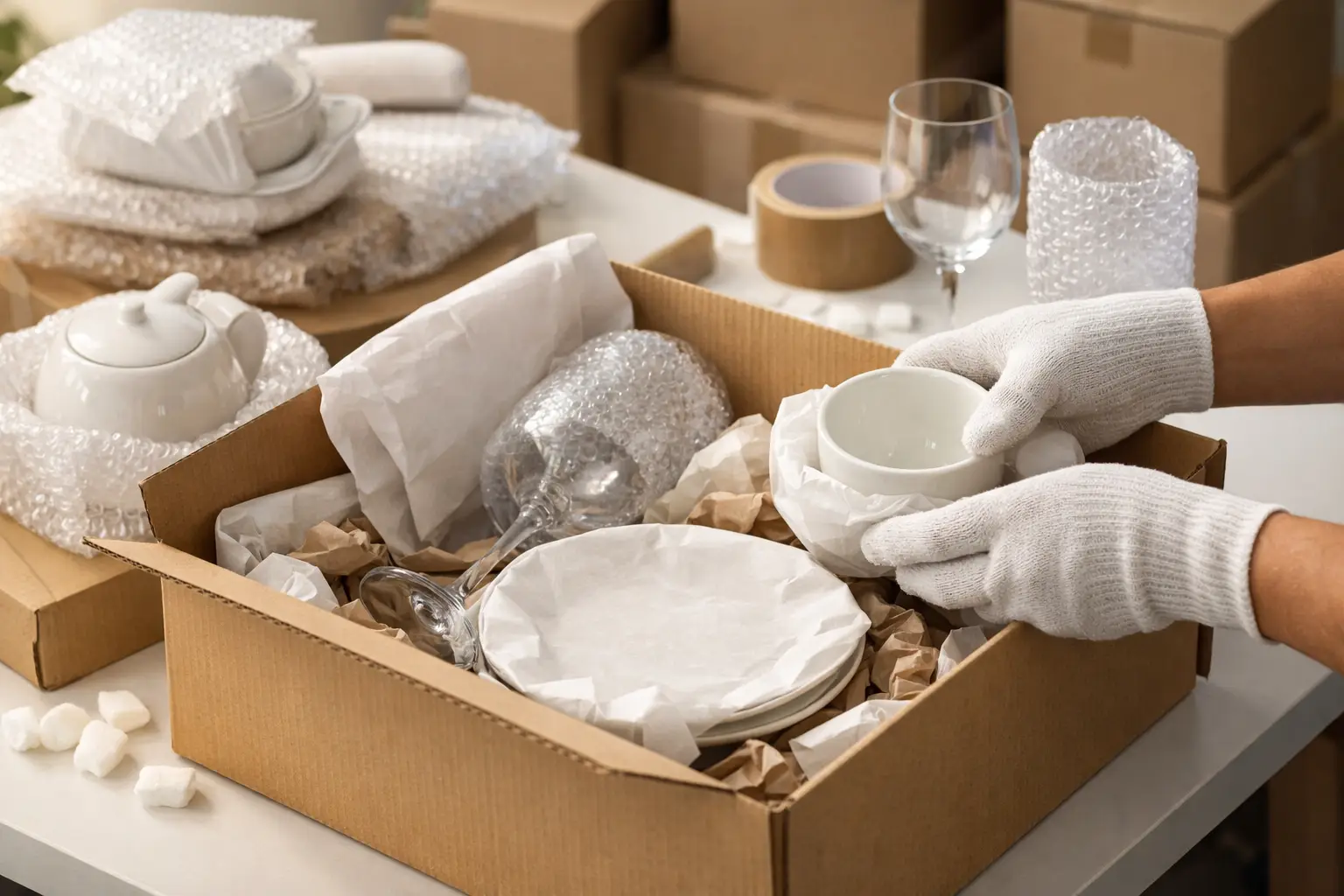
Packing Fragile Kitchenware Case Study Results
A packing fragile kitchenware case study showing how careful wrapping, box choice and loading reduced breakage during a Berkshire home move without delays.
A packing fragile kitchenware case study is most useful when it shows the decisions that prevent damage before the removal lorry leaves the drive. Kitchen boxes often contain the highest concentration of breakable items in a home: plates, glasses, serving bowls, cookware, jars and small appliances. A rushed approach can turn one box into a costly problem.
The following anonymised, representative example is based on the methods used for a three-bedroom home move in Berkshire. The aim was simple: pack a full kitchen safely, keep the boxes manageable, and avoid wasting time searching for essentials at the new property.
The move: a kitchen with more fragile items than expected
The customer was moving from a family home near Reading to a new property within the county. They had packed some bedroom items themselves but asked for help with the kitchen after realising how much glass, china and heavy cookware was still in the cupboards.
The kitchen included everyday crockery for six, a separate dinner set for guests, wine and pint glasses, mugs, glass storage containers, a microwave, a stand mixer, knives, pans and several jars of preserved food. The customer was particularly concerned about a set of serving dishes and glasses that had sentimental value.
The main risk was not one unusually delicate item. It was the mix of materials. Heavy pans can crush lighter boxes, loose glasses knock together, and poorly packed plates can crack under pressure. There was also limited time, as completion and key collection were scheduled for the same day.
Packing fragile kitchenware: case study plan
Before wrapping anything, the team separated the kitchen into four groups: fragile glass and china, heavy cookware, food and pantry items, and appliances. This prevented the common mistake of filling large cartons with whatever was nearest.
Fragile items went into smaller, stronger double-walled boxes. Heavy items such as cast-iron pans and the stand mixer were packed separately in small cartons, with the weight kept low enough for safe lifting. Dry food went into medium boxes, while opened liquids and perishable goods were set aside for the customer to transport or use before moving day.
Each carton was marked clearly with its room, contents and handling requirement. Labels such as “Kitchen - glasses - fragile” may seem basic, but they matter when boxes are being unloaded into a new home with several people working at once. Clear labelling also helps ensure fragile cartons are placed on top of the load, not underneath furniture or appliance boxes.
The materials used
Good packing starts with the right materials, but more wrapping is not always better. The goal is to stop movement inside the box while keeping the carton stable and liftable.
For this move, the packing process used packing paper, bubble wrap for the most vulnerable pieces, strong tape, dividers for glasses, and double-walled cartons. Clean linen and tea towels were used only as extra cushioning around a few large serving bowls, not as the main protection. Soft household items can help, but they do not replace proper packing paper and a firm box.
The bottom of every carton was reinforced with tape. A layer of crumpled paper formed a cushion at the base, especially for glassware and china. This protects against small impacts when a box is set down and helps distribute pressure across the bottom of the carton.
Plates, bowls and glasses
Dinner plates were wrapped individually in paper, then placed vertically in the box rather than stacked flat. A vertical position spreads pressure more safely and reduces the chance of a crack travelling through a stack. Bowls were wrapped and nested only where their shapes allowed it, with paper between each piece.
Wine glasses and pint glasses were wrapped from the stem or base upwards, with extra paper around the bowl and rim. They were placed into cardboard dividers, then surrounded with additional paper so they could not shift. Glasses should never be packed loosely at the top of a box simply because there is space left.
The customer’s larger serving platters were wrapped in several layers and placed upright in a dedicated carton. This took more room than mixing them with everyday plates, but it was the safer choice. High-value or sentimental pieces deserve their own space where possible.
Managing weight was as important as cushioning
One of the biggest packing errors is treating a strong box as permission to overfill it. A carton can be structurally sound and still be unsafe if it is too heavy to carry properly.
In this case, cookware was split across several small boxes. Pans were wrapped to avoid scratching, but the priority was weight control. A heavy saucepan packed with glasses or plates creates unnecessary risk, even when both are wrapped well.
The stand mixer was packed in a snug carton with its attachments removed and wrapped separately. Empty spaces around the appliance were filled with packing paper to stop movement. The original box is useful if it is available and in good condition, but a properly sized professional carton is often safer than an old, weakened retail box.
As each box was filled, it was gently checked for movement. If anything shifted when the carton was lifted or tilted slightly, more paper was added. The lid was closed only when the top layer was level and supported. A bulging box is harder to stack and more likely to split during handling.
Loading the kitchen without creating new risks
Careful wrapping can be undone by poor loading. On moving day, fragile kitchen cartons were loaded after heavier household items had been secured in the lorry. They were placed upright, away from areas where tall furniture or large appliances could move against them.
The cartons were not stacked high. Heavier kitchen boxes sat low in the load, while labelled fragile cartons were kept on top and secured against movement. This is one reason professional packing and removals work well together: the people who pack the boxes understand what is inside and can load accordingly.
At the new property, the boxes were placed directly in the kitchen rather than left in a hallway or garage. That reduced extra handling and allowed the customer to unpack the essentials first. The kettle, mugs, plates, cutlery and a small set of pans had been packed together in a clearly marked priority box, making the first evening easier.
What made the difference in this move
The result was not down to one expensive material or a complicated system. It came from keeping fragile items separate from heavy ones, using boxes that matched the contents, filling gaps properly, and loading with the labels in mind.
There were trade-offs. Packing each glass and plate individually takes longer than placing them in a box with a few tea towels. More small cartons also mean more boxes to carry. But for a full kitchen move, that extra preparation is usually far cheaper and less stressful than replacing damaged items or dealing with a delayed move-in.
Self-packing can work well for a small kitchen with a limited number of sturdy items. It becomes harder when time is short, there are valuable pieces to protect, or the kitchen has built up over years. In those cases, a professional packing service gives you a clear process and removes a major job from moving week.
HomeGo Removals & Packing Ltd can provide fully insured packing and removal support across Berkshire and surrounding areas, with fixed-price quotes and flexible booking options for planned or short-notice moves.
Before your move date, open the kitchen cupboards early and assess what is really there. The safest kitchen move is rarely the fastest one at the start, but it is often the one that lets you make a cup of tea in your new home without opening a box of broken glass.
Get a free fixed written quote in 2 mins
Insurance up to £50,000 included · No cancellation fees · Free dismantling & reassembly

Our team of fully-insured removal specialists helps families across Slough, Windsor, Maidenhead and the wider Berkshire area move home every week. We pack, load, drive and unload boxes every day — every guide on this blog comes from real jobs, not theory.
Reviewed & fact-checked by Allah Nazar Ihsan — Founder & Managing Director, HomeGo Removals & Packing Ltd
Planning your move?
Get a free, no-obligation written quote from Berkshire's trusted independent removers. We're answering the phone right now — 24 hours a day, 7 days a week.