Best Boxes for House Move: What You Need
Choose the best boxes for house move with practical advice on sizes, strength and quantities, plus packing tips to keep your belongings protected safely.
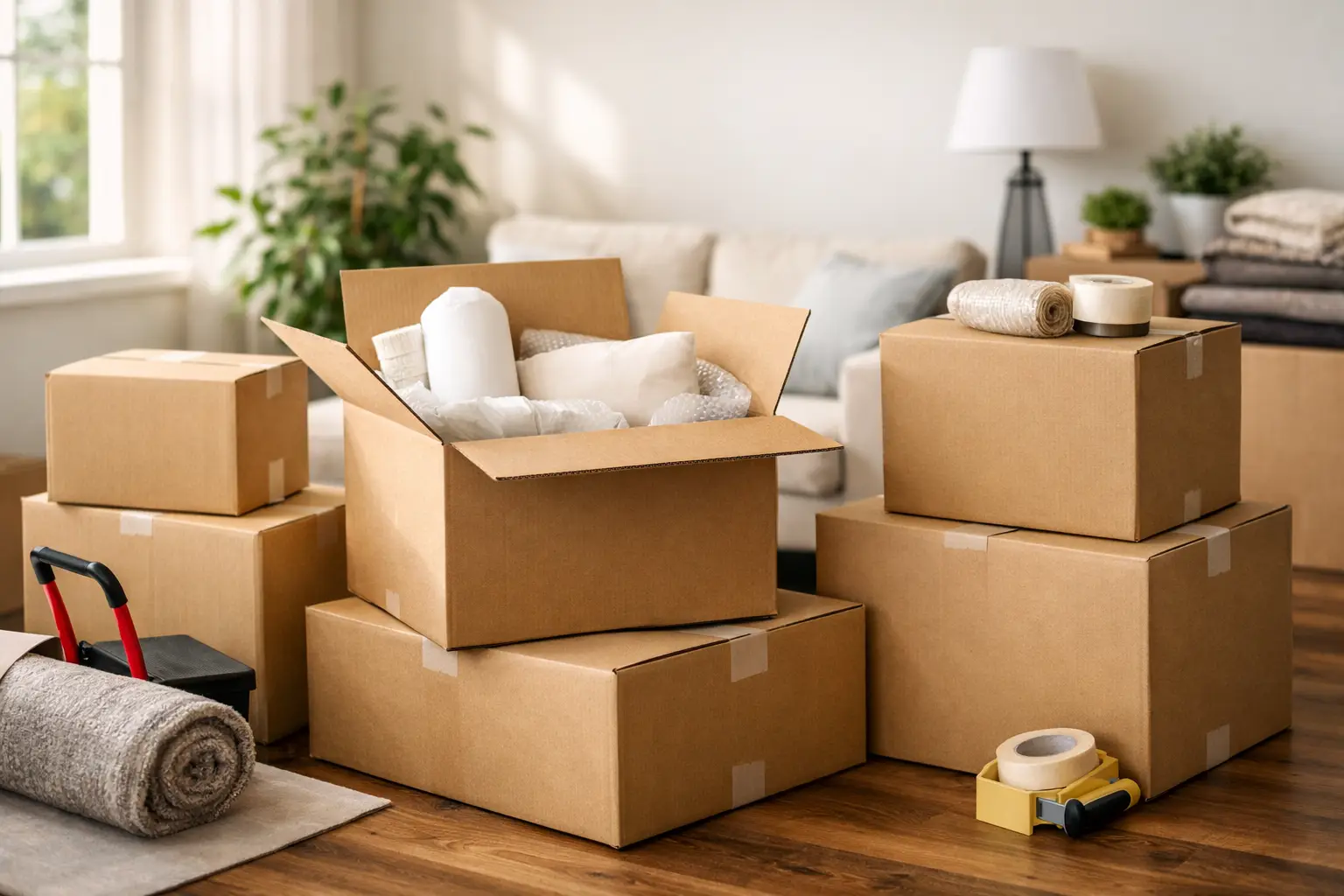
A house move can go wrong before the van arrives if the boxes split, buckle or are impossible to carry. Choosing the best boxes for house move is less about buying the biggest bundle and more about matching each box to what is going inside it. The right mix keeps packing controlled, protects your belongings and helps the removal team load safely.
What makes a moving box worth buying?
A proper moving box is made from corrugated cardboard, with two or more layers around the sides. It should have clean folds, firm corners and a base that can be taped shut without gaps. Cheap single-wall boxes may be fine for cushions or bedding, but they are a false economy for books, kitchenware and anything valuable.
Double-wall cardboard is the better choice for most household items. It holds its shape when stacked in a removal lorry and is less likely to crush if another box is placed on top. For heavy or fragile contents, look for boxes with reinforced handles or use smaller boxes without handles, as hand holes can weaken the sides when overloaded.
New boxes offer the most reliable protection. Used boxes can work for light, dry items if they are clean, rigid and free from tears, damp or old tape. Avoid supermarket produce boxes and thin online-delivery cartons for a full house move. They are rarely designed for repeated lifting or stacking.
The best boxes for house move by room
You do not need every box to be the same size. A sensible selection makes packing faster and prevents the common mistake of filling a large box with heavy items until no one can safely lift it.
Small boxes for books and dense items
Small boxes are essential for books, records, tools, tins, paperwork, bottles and heavier kitchen equipment. Books in particular should be packed flat or with their spines alternating, rather than all standing upright in one direction. Fill empty gaps with packing paper, then stop before the box becomes too heavy.
As a rule, one person should be able to lift a box steadily without straining. If a small box of books is difficult to move across the room, it is too heavy for a staircase, driveway and van load-out.
Medium boxes for everyday household contents
Medium boxes are the workhorse of most moves. Use them for plates, pans, toys, shoes, bathroom items, small appliances, ornaments and folded clothes. They are large enough to be useful but manageable enough to lift safely.
For crockery, wrap each item individually in packing paper and place plates vertically, like records, rather than flat in a tall pile. Put heavier pieces at the bottom, keep the weight balanced and use crumpled paper to stop movement. A box labelled “fragile” still needs proper internal protection - labels do not prevent items knocking together.
Large boxes for light, bulky belongings
Large boxes are for duvets, pillows, towels, coats, lampshades, soft toys and lightweight plastic items. They should not be filled with books, files, pans or stacks of magazines. Their size makes it tempting to overpack them, which is when the base gives way or the box becomes unsafe to carry.
Use a large box where volume matters more than weight. If you are moving from a flat with limited storage, they are particularly useful for linen cupboards and wardrobes that have accumulated bulky bedding.
Wardrobe boxes for hanging clothes
Wardrobe boxes have a hanging rail inside, allowing clothes to move directly from the wardrobe into the box. They are useful for suits, dresses, coats and clothing that creases easily. They also save time on moving day because there is no folding, bagging and rehanging.
They are not essential for every move. If you have mostly casual clothing and enough time to pack, sturdy medium boxes or clean suitcases may be more cost-effective. Keep wardrobe boxes for the items that genuinely benefit from hanging transport.
How many moving boxes do you need?
The number depends on how long you have lived in the property, how much storage you have and whether you are packing yourself. A minimalist one-bedroom flat may need 20 to 30 boxes. A typical two-bedroom home often needs 35 to 55, while a family three-bedroom house can easily require 60 to 90 or more.
These figures are a starting point, not a guarantee. Garages, lofts, sheds, home offices and children’s rooms often contain far more than people expect. Start with a mixed pack, then buy extra medium and small boxes rather than relying only on large ones.
A practical split for a typical two-bedroom move is roughly half medium boxes, a quarter small boxes, a smaller number of large boxes and a few specialist wardrobe or picture boxes where needed. Leave a small reserve for the final items that cannot be packed until the day before moving, such as kettle accessories, charging cables and last-minute bathroom contents.
Do not overlook specialist boxes and packing materials
Standard boxes cover most of the house, but some belongings need more protection. Picture and mirror boxes are designed to fit frames with padding around the edges. TV boxes are useful if you no longer have the original packaging, although the screen should still be protected with suitable foam or a padded cover. Mattress bags protect against dirt and moisture during loading, while sofa covers help prevent scuffs.
For glassware, ceramics and electronics, the box is only one part of the job. Packing paper, bubble wrap, tape and void fill are what stop items moving inside. Newspaper can leave ink marks on plates, glass and fabrics, so clean packing paper is the safer option.
Use quality packing tape rather than masking tape or string. Tape the base with several strips, including one across the centre seam and additional strips across the width for heavier boxes. Once packed, close the top properly. Open boxes cannot be stacked safely and can spill when carried upstairs.
Pack boxes so they can travel safely
A strong box can still fail if it is packed badly. Keep heavier items low, fill spaces so contents cannot shift and aim for a flat top that will stack securely. Do not mix cleaning chemicals with food, and keep medicines, passports, tenancy documents, keys and valuables with you rather than in the removal load.
Label each box on at least two sides with the destination room and a short description, such as “Kitchen - mugs and glasses” or “Main bedroom - winter clothes”. Add “fragile” and “this way up” where appropriate, but avoid vague labels such as “miscellaneous”. Clear labels save time at the new property and make unpacking less frustrating.
It is also worth numbering boxes if you have a larger move. A simple count lets you check that everything has arrived before the team leaves. Photographing valuable items before packing provides an extra record of their condition.
When professional packing is the better option
Self-packing keeps costs down, but it takes longer than most people allow for. It can be the right choice if you have several weeks, a modest amount of belongings and no particularly fragile or high-value items. It is less practical when you are working full time, moving with children, facing a completion deadline or dealing with a large family home.
Professional packers bring the right boxes, wrapping materials and methods, then pack room by room with a clear system. This is especially useful for kitchens, glass cabinets, artwork and awkward items. HomeGo Removals & Packing can provide packing support alongside a fixed-price, fully insured move, so the packing plan and transport are handled together.
The best approach is often a middle ground: pack clothes, books and straightforward household items yourself, then use professional packing for breakables and the rooms that take the longest. Whatever route you choose, buy boxes early, pack by room and keep weight under control. A well-packed box is easier to carry, easier to load and far more likely to arrive exactly as it left.
Get a free fixed written quote in 2 mins
Insurance up to £50,000 included · No cancellation fees · Free dismantling & reassembly
AI-assisted article — Drafted by HomeGo's AI content system and reviewed by our editorial team. Source-linked facts, real local knowledge from .

AI-assisted article reviewed by HomeGo's editorial team.
Reviewed & fact-checked by Allah Nazar Ihsan — Founder & Managing Director, HomeGo Removals & Packing Ltd
Planning your move?
Get a free, no-obligation written quote from Berkshire's trusted independent removers. We're answering the phone right now — 24 hours a day, 7 days a week.