Best Furniture Assembly Tools for a Smooth Move
Find the best furniture assembly tools for moving day, from hex keys to a cordless drill, plus practical advice to protect furniture, floors and time.
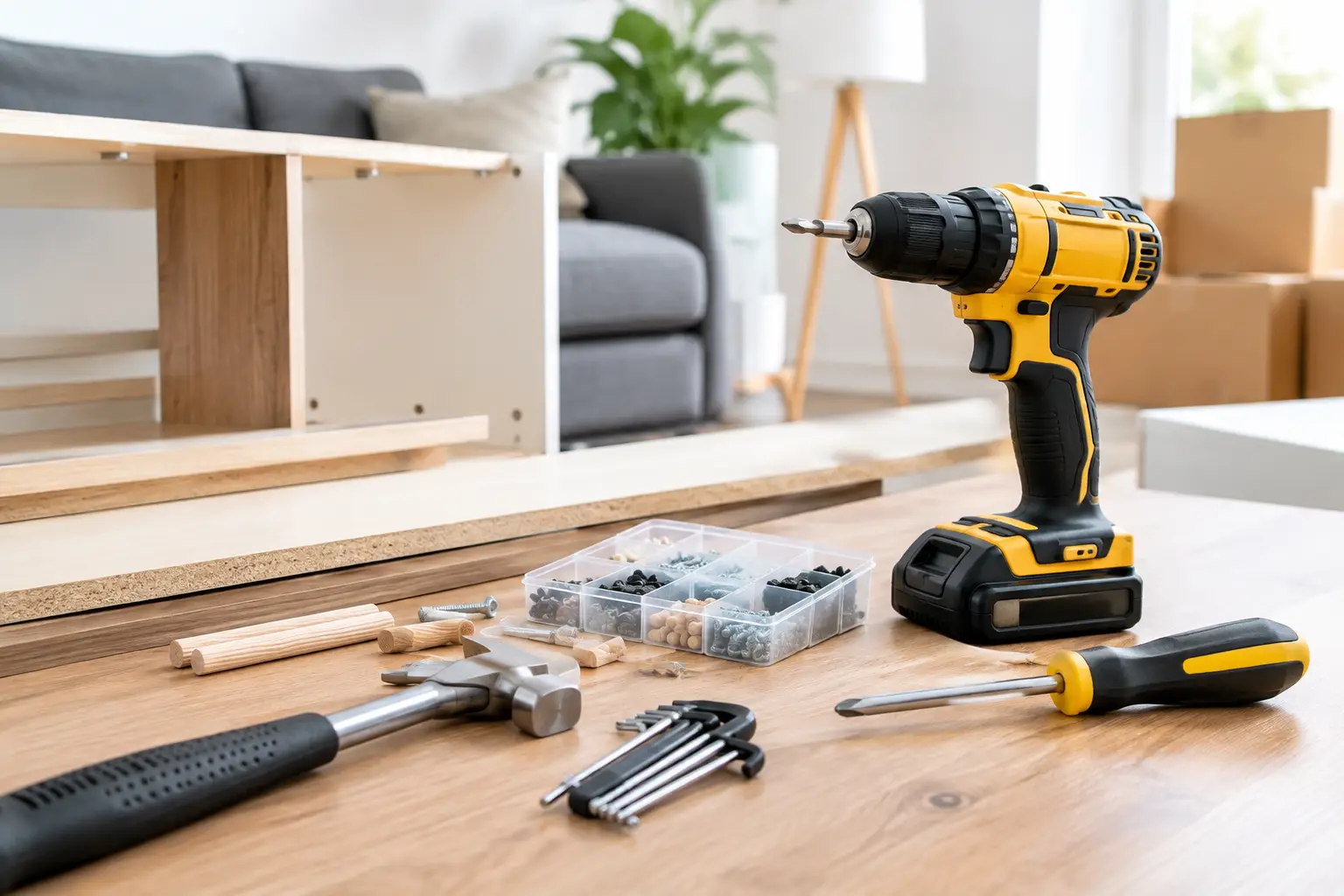
A flat-pack wardrobe is rarely difficult until it is 8pm, the mattress is on the floor and the one tool you need is missing. The best furniture assembly tools make the work faster, safer and far less frustrating, whether you are building a new bed after a house move or putting desks back together after an office relocation.
You do not need a workshop full of equipment. A small, reliable kit handles most flat-pack furniture from beds, wardrobes and drawers to desks, bookcases and TV units. The right choice depends on the furniture, the space available and whether you are assembling one item or several rooms’ worth.
Best furniture assembly tools to keep in your kit
A supplied Allen key may get the job done, but it is slow, uncomfortable and easy to round off under pressure. A few proper hand tools will save time across almost every assembly job.
The most useful kit includes:
- A ratcheting screwdriver with interchangeable Phillips, Pozidriv, flat-head and Torx bits
- A compact cordless drill-driver with adjustable torque and a set of screwdriver bits
- A set of hex keys, including ball-end keys for awkward angles
- A rubber mallet for wooden dowels, backing panels and parts that need gentle persuasion
- A 5-metre tape measure, pencil and small spirit level
- A claw hammer for occasional pins and small nails
- A utility knife with fresh blades for opening cartons safely
- A pair of adjustable pliers and a small adjustable spanner
For most households, the screwdriver, drill-driver, tape measure and rubber mallet do the majority of the work. The other items prevent small problems from stopping the job halfway through.
A ratcheting screwdriver is better than a basic set
Furniture fittings use different screw heads, sometimes in the same box. A ratcheting screwdriver with secure bit storage is quicker than hunting through a loose screwdriver set. Look for a comfortable grip and bits that fit tightly. A poor-fitting bit can damage screw heads, especially on budget flat-pack fittings.
Pozidriv bits are particularly useful in the UK, while Phillips bits are still common. If the bit slips or cams out, stop and check the size before applying more force. Replacing a damaged fitting is much more inconvenient than taking 30 seconds to use the correct bit.
Use a cordless drill-driver with care
A compact cordless drill-driver is one of the best furniture assembly tools when there are multiple items to build. It is useful for long screws, repeated fittings and larger units such as wardrobes, beds and office desks. A 12V or 18V drill-driver is normally sufficient for home furniture assembly.
The trade-off is control. A powerful drill can strip chipboard, split timber or pull a cam fitting too tight in seconds. Use a low torque setting, start slowly and finish delicate screws by hand. Never use hammer mode for furniture, and do not assume every pre-drilled hole needs enlarging.
For one small bedside cabinet, a manual screwdriver may be simpler. For a full flat or office setup, a drill-driver can save a significant amount of time.
Tools that protect the furniture and your home
Assembly is not only about getting screws into place. Freshly moved furniture, rented floors and newly painted walls are easy to mark while parts are laid out or large units are lifted upright.
A rubber mallet is safer than a metal hammer for tapping dowels into place and seating joints. Use it with controlled, light blows. If a panel will not fit, do not keep hitting it. Check the instructions, the orientation of the piece and whether a cam lock or dowel has been installed in the wrong hole.
A spirit level helps with wardrobes, shelving and desks. A unit that looks square during assembly can still rock on an uneven floor. Adjusting feet where fitted, or using the correct furniture pads, is better than forcing joints to compensate for the floor.
Keep felt pads, cardboard sheets or a moving blanket underneath parts while you work. This matters on laminate, wood and tiled floors, and it also helps stop glossy panels getting scratched. Cut packaging open carefully too. A utility knife can mark a worktop or slice into a panel if the blade is pushed too deeply.
Measuring tools prevent expensive mistakes
Measure the final room, not just the furniture. Check ceiling height before building a tall wardrobe flat on the floor, as there may not be enough clearance to lift it upright. Measure doorways, stairwells and the route into the room before assembling bulky pieces where they cannot be moved again.
This is particularly relevant after a move into a flat, terraced house or office with tight access. A large desk might fit through the front door in pieces but not once assembled. Building it in the correct room avoids having to take it apart again.
A practical order for furniture assembly
Clear a working area before opening boxes. Keep children and pets away from small fittings, sharp packaging and heavy panels. Lay out parts in groups and compare them with the instruction booklet before starting. Manufacturers occasionally label similar pieces differently, and catching a missing component early is far easier than finding out near the end.
Build large items first where space allows, starting with beds, wardrobes and desks. These pieces define the room layout and are hardest to move once completed. Smaller drawers, side tables and shelves can follow.
Leave doors, drawer fronts and handles until the main frame is square and stable. Tighten fittings in stages rather than fully tightening one corner at a time. This gives you room to align the structure properly and reduces the chance of a twisted frame.
When fitting a wardrobe or tall shelving unit, secure it to the wall using the supplied anti-tip kit where appropriate. This is especially important in homes with young children. Check the wall type and use fixings suitable for plasterboard, masonry or timber studs. If you are unsure, professional help is the safer option.
When the supplied tools are enough
Not every item justifies buying specialist equipment. Small occasional furniture, such as a simple chair, compact table or basic drawer unit, can often be assembled using the Allen key and spanner in the box. The supplied tools are designed for the fittings included, even if they are not particularly comfortable for a long job.
The case for better tools grows when you are assembling several items, working against a moving-day deadline or dealing with heavier furniture. A good manual screwdriver and a proper hex key set are low-cost upgrades that will be used again. A drill-driver is worth considering if you regularly handle DIY tasks as well as furniture.
Avoid using improvised tools. Kitchen knives, coin edges and pliers used on screw heads can damage fittings and increase the risk of injury. If a part does not fit, the issue is usually alignment or a missed step, not a lack of force.
Common assembly problems and how to avoid them
The most common mistake is building a panel backwards. Check the position of pre-drilled holes, unfinished edges and drawer runners before fixing anything permanently. Another frequent issue is mixing up screws that look nearly identical. Keep each fitting type in a separate pot, tray or section of the packaging.
Do not assemble furniture directly against the wall unless the instructions specifically allow it. You need space to fit backing boards, adjust panels and lift the finished item safely. For heavy units, two people are normally safer than one when turning or positioning the furniture.
If fittings are loose in chipboard, do not keep tightening them. This can widen the hole and reduce the grip further. Stop, assess the damage and use an appropriate repair method or replacement fitting. Forcing a failed connection can make a stable item unsafe.
When to book furniture assembly support
Professional assembly is useful when time is tight, the furniture is large, or you are moving straight into a property and need bedrooms or workspaces ready quickly. It can also reduce the risk of damage when handling wardrobes, bunk beds, office furniture or wall-fixed units.
HomeGo Removals & Packing can combine furniture assembly with a removal or relocation booking, so you are not left sorting tools, cartons and heavy panels after the lorry has been unloaded. This is often the practical option for busy households, landlords preparing a property or small businesses reopening quickly after a move.
Keep the instructions, spare fittings and product labels in one envelope once the job is finished. Future moves, repairs and replacements become much simpler when everything is in one place. A basic tool kit may not make flat-pack furniture enjoyable, but it will make moving day more manageable and help your new space feel usable sooner.
Get a free fixed written quote in 2 mins
Insurance up to £50,000 included · No cancellation fees · Free dismantling & reassembly
AI-assisted article — Drafted by HomeGo's AI content system and reviewed by our editorial team. Source-linked facts, real local knowledge from .

AI-assisted article reviewed by HomeGo's editorial team.
Reviewed & fact-checked by Allah Nazar Ihsan — Founder & Managing Director, HomeGo Removals & Packing Ltd
Planning your move?
Get a free, no-obligation written quote from Berkshire's trusted independent removers. We're answering the phone right now — 24 hours a day, 7 days a week.