Can Movers Move Aquariums Without Damage?
Can movers move aquariums? Learn what can be moved, how to protect fish and glass, and when specialist aquarium transport is the safer choice at home.
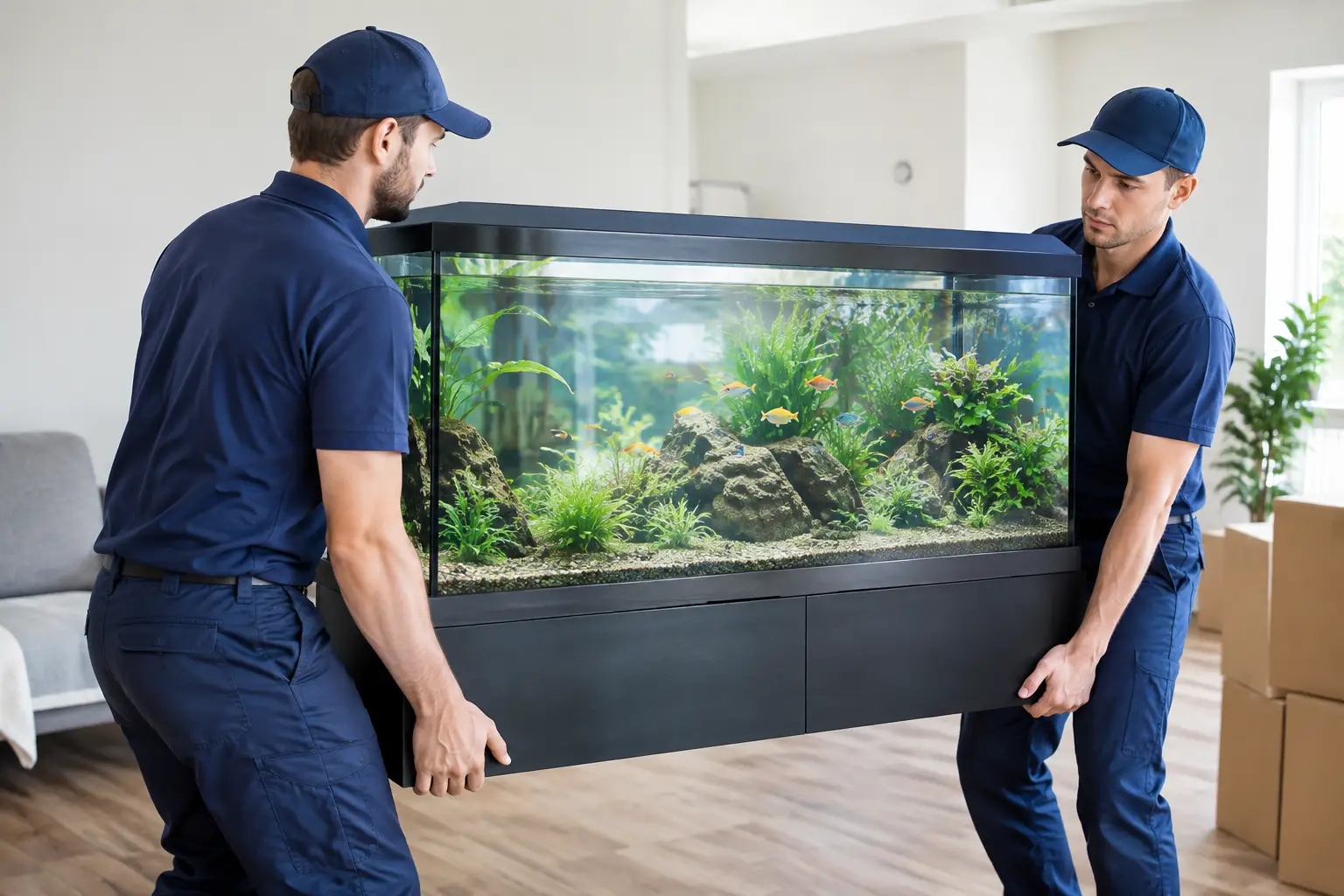
An aquarium is not just another heavy item in the living room. It is glass, water, equipment, livestock and a carefully balanced environment. So, can movers move aquariums? Yes, in many cases, but the tank must be prepared properly and the job needs to be agreed in advance. A removal team can safely handle an empty, clean and protected aquarium. Moving a full tank with fish still inside is a different matter and is usually not safe.
For a house move in Berkshire, London or the surrounding areas, the most reliable approach is to separate the aquarium move into manageable stages. Your movers handle the lifting, protection and transport. You or an aquarium specialist manage the fish, water quality and restart at the new property.
Can movers move aquariums safely?
Movers can move aquariums safely when the aquarium has been emptied, cleaned where appropriate and packed for transport. This applies to many standard freshwater and marine tanks, provided the glass, cabinet and equipment can be handled without unreasonable risk.
The main issue is weight. Water weighs roughly one kilogram per litre, before adding the glass, gravel, rocks and cabinet. A 200-litre aquarium can easily weigh well over 250kg when full. Its base may also be under stress from the water pressure. Trying to carry it full or partly full can crack the glass, damage seals, injure the people lifting it or cause a major leak in the removal vehicle.
A professional removal company should not be expected to transport a stocked aquarium as though it were a bookcase. Fish and other livestock need stable temperature, oxygen and suitable containers. Marine systems add further complications, including sensitive corals, live rock and specialist filtration.
Before booking, tell the removal company the tank dimensions, approximate capacity, whether it is glass or acrylic, where it is located and whether there are stairs, tight turns or parking restrictions. Clear information allows the team to plan the correct number of movers, protective materials and route out of the property.
What should be moved separately?
The aquarium itself, its cabinet and its contents should be treated as separate parts of the move. Even a small amount of water left in a tank can shift suddenly while it is being carried. Empty the tank fully before movers lift it.
Fish should travel in secure fish bags or lidded transport containers, using water from the existing aquarium. For a short move, this helps reduce shock. Keep containers upright, insulated from hot or cold weather and out of direct sunlight. Do not seal fish into a container for longer than necessary, and avoid feeding them immediately before moving unless a specialist has advised otherwise.
Plants, ornaments, gravel, heaters, filters, lights and pumps should also be packed separately. Keep filter media damp in aquarium water if you want to preserve beneficial bacteria. Label cables and take photographs of the set-up before dismantling it. That can save a great deal of time when reconnecting everything at the new address.
For larger aquariums, it is sensible to retain some of the original water in clean containers. It will not remove the need to refill the tank with treated water, but it can make the transition easier for fish when the aquarium is restarted.
Preparing an aquarium for removal
Preparation is where most aquarium moves are won or lost. Start early rather than dismantling the tank as the removal team arrives. Fishkeeping tasks take longer than expected, particularly if the aquarium has established plants, large rocks or complicated pipework.
First, arrange temporary containers for fish and any live plants. Next, switch off electrical equipment and allow heaters to cool before removing them. Drain the aquarium using a siphon or pump, keeping any water you plan to reuse in suitable containers.
Remove rocks, wood and heavy decorations before trying to move the tank. These can crack the base if they shift in transit. Gravel and substrate should normally be removed too, especially from larger tanks. While some small tanks can be moved with a very thin layer of damp substrate, it increases the risk and is rarely worth it.
Once empty, wipe down the exterior and ensure the tank is dry. Do not use household cleaning chemicals inside the aquarium. Glass panels need corner protection, padded blankets and secure positioning in the vehicle. A tank should travel upright whenever possible, supported underneath and never placed where other items can fall onto it.
If the aquarium has a separate cabinet, empty it completely. Shelves, doors and loose fittings may need securing or removing. The cabinet can often be moved as a separate item, which reduces strain on both the furniture and the aquarium.
When specialist aquarium transport is the better choice
Some aquariums are beyond the scope of a standard house removal. Very large custom-built tanks, wall-mounted displays, reef systems, tanks with delicate corals or installations involving built-in plumbing may need an aquarium specialist.
This is not simply about protecting the glass. A specialist can advise on holding fish for longer periods, maintaining oxygen and temperature, handling marine livestock and recommissioning the system after delivery. If access requires a crane, external lift, specialist suction equipment or removal of windows or doors, it must be planned separately.
It also depends on distance and timing. Moving a small freshwater aquarium across town can often be managed in one day. A long-distance move, a delayed completion or an overnight gap between properties creates greater risk for livestock. In those situations, temporary boarding with an aquatic retailer or specialist may be the safer option.
Questions to ask your removal company
Do not assume every mover offers the same level of handling. Ask whether the company is prepared to move an empty aquarium, whether the item is covered under its insurance arrangements, and whether additional packing is available. It is also worth confirming how many movers will attend and whether the team has been told about difficult access.
Be precise about the size. Saying that a tank is “large” is less useful than providing length, width, height and capacity. Mention if it is on an upper floor, if the property has narrow stairs, or if the cabinet is particularly heavy. A fixed-price quote should be based on the actual work involved, not a surprise discovered on moving day.
At HomeGo Removals & Packing, clear pre-move information helps the team plan safe handling and provide a straightforward quote. For suitable empty tanks, professional packing materials and careful loading can reduce the chances of damage during a local or longer-distance move.
Setting up the aquarium at the new property
Put the cabinet in its final position before rebuilding the tank. Check that the floor is level and that the cabinet is fully supported. An aquarium must sit on a stable surface, away from direct heat, strong sunlight and areas where doors or furniture could knock it.
Reinstall substrate, decorations and equipment, then add treated water at an appropriate temperature. If you saved filter media, reconnect it promptly. Let the system circulate and check every hose, seal and connection before returning fish. Test the water where possible, particularly after a longer move or if the aquarium has been without filtration for several hours.
Do not rush livestock back into cloudy or unstable water because you want the move finished. Fish may need gradual acclimatisation, especially if the water temperature or chemistry differs from the previous property. Keep lights low at first and avoid overfeeding for the first day or two.
The safest plan is a planned plan
Movers can handle aquariums, but only when everyone is clear about what is being moved and how it will be prepared. Empty tank, protected glass, separate equipment and a realistic plan for fish are the basics. If your aquarium is unusually large, marine, built in or packed with valuable livestock, bring in an aquatic specialist alongside your removal team. A little preparation before moving day protects the tank, the property and the living things that depend on it.
Get a free fixed written quote in 2 mins
Insurance up to £50,000 included · No cancellation fees · Free dismantling & reassembly

Our team of fully-insured removal specialists helps families across Slough, Windsor, Maidenhead and the wider Berkshire area move home every week. We pack, load, drive and unload boxes every day — every guide on this blog comes from real jobs, not theory.
Reviewed & fact-checked by Allah Nazar Ihsan — Founder & Managing Director, HomeGo Removals & Packing Ltd
Planning your move?
Get a free, no-obligation written quote from Berkshire's trusted independent removers. We're answering the phone right now — 24 hours a day, 7 days a week.