Furniture Assembly After Moving Without Delays
Furniture assembly after moving is easier with a clear room plan, the right checks and insured help when heavy or complex items need fitting safely, too.
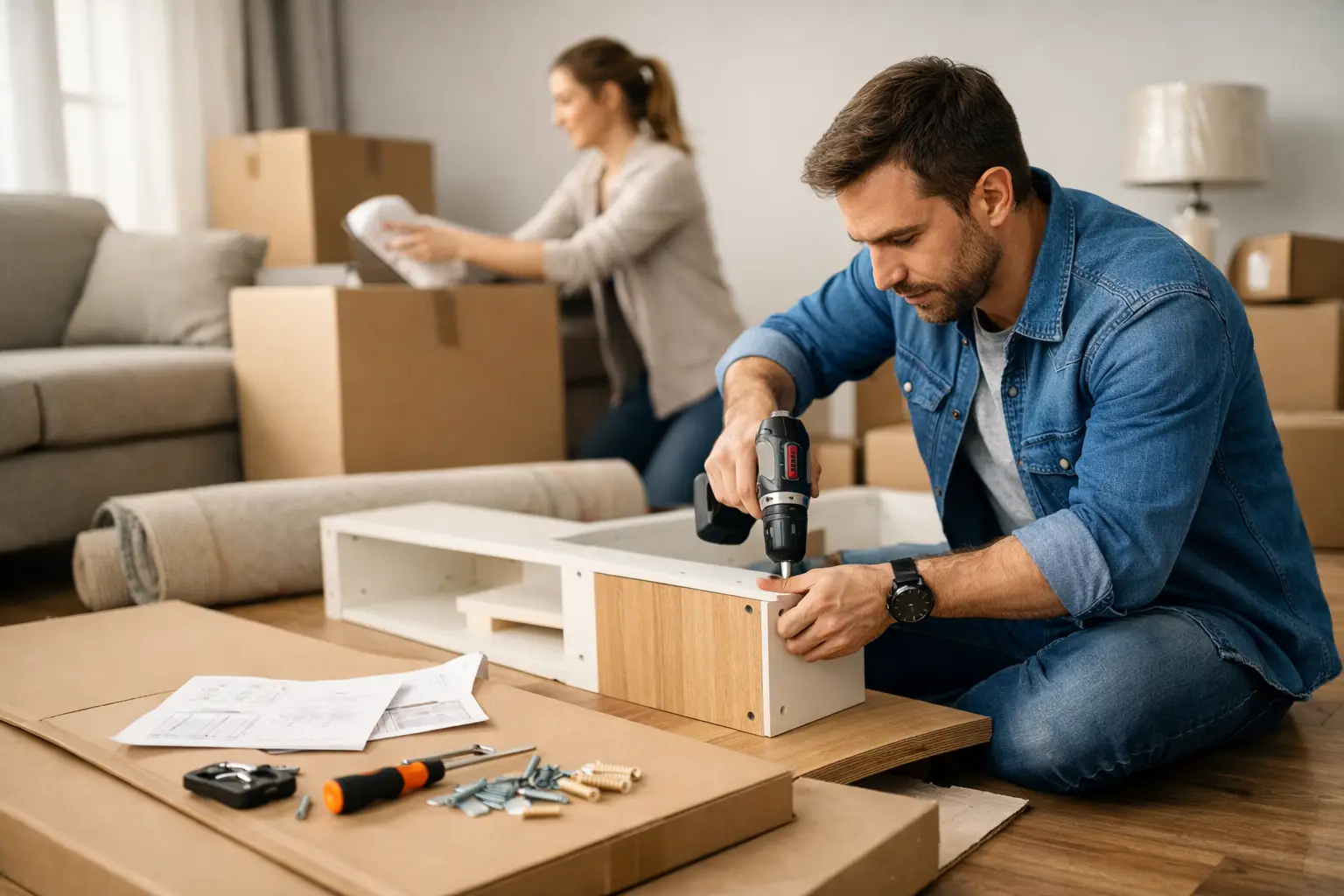
The lorry has been unloaded, the boxes are inside and the keys are finally in your hand. Then you notice the bed is in pieces, the wardrobe doors are against a wall and the dining table has six loose legs. Furniture assembly after moving is often the job that decides whether your new house feels usable on day one or remains a storage space for another week.
Rebuilding furniture is not simply a case of finding an Allen key. It requires room to work, the correct fittings, a sensible order of jobs and enough time to do each item safely. A rushed rebuild can leave a wardrobe unstable, a bed frame noisy or a cabinet damaged before it has even been used.
Plan furniture assembly after moving before unload day
The best time to think about assembly is before the move, not when everyone is tired. Make a short list of every item that will be dismantled or needs rebuilding. Include beds, wardrobes, shelving units, desks, dining tables, cot beds and large flat-pack furniture. Mark which pieces are essential for the first night and which can wait.
A simple room plan is useful, particularly in smaller flats, new-build properties and homes with narrow staircases. Measure the largest items and the intended space, including door swings, radiators, sockets and built-in cupboards. A wardrobe that fits on paper may not fit once its doors need clearance to open.
If your removal team is also taking furniture apart, label each item clearly and keep its fittings together. Use a sealed bag for screws, bolts, brackets and shelf supports, then attach that bag securely to the relevant furniture piece. Do not place loose fittings in a general box. It only takes one missing cam lock to stop an entire unit being rebuilt.
Photographs help too. Take clear pictures of cable routes behind desks and TV units, the position of brackets, adjustable feet and any unusual fixings. Keep instruction manuals in one marked folder or box that travels with you, rather than in the main load.
Start with the furniture that makes the home liveable
You do not need to assemble every item on moving day. Prioritising saves energy and prevents rooms becoming crowded with half-built furniture.
Start with the beds. A properly assembled bed gives everyone a place to sleep and keeps mattresses off the floor. Check that the frame is level, centre support legs are fitted where supplied and slats are fully seated before putting the mattress on. If a bed frame has been transported in sections, inspect joints and brackets for bends or cracks before tightening anything.
Next, focus on the practical essentials: a table or work surface, a sofa where possible, basic storage for clothes and a desk if someone needs to work the following morning. A kitchen table may be more valuable than a display cabinet during the first few days. Likewise, a functional wardrobe is useful, but it can wait if the bedroom is too tight to assemble it safely.
Leave decorative shelving, occasional furniture and non-essential storage until the main boxes have been cleared. Building a bookcase around moving cartons is frustrating, and it raises the risk of scratching floors or losing components.
Give yourself a safe, clear assembly area
Flat-pack furniture needs more space than its finished footprint. Clear a section of floor, ideally in the room where the item will stay, and protect finished flooring with clean cardboard, blankets or a dust sheet. Assemble large wardrobes and tall cabinets close to their final position, as they may be difficult or unsafe to move once upright.
Keep children and pets away from the work area. Panels can topple, small fittings are a choking risk and open toolboxes create hazards when people are walking through an unfamiliar home. Good lighting matters as well. It is easy to fit a bracket backwards or use the wrong screw when working in a dim corner.
Have the right equipment ready. Most furniture requires a screwdriver, Allen keys, a spirit level, a tape measure and a rubber mallet. A drill may be needed for wall fixings, but it should not be used to force fasteners into chipboard furniture unless the instructions specifically allow it. Power tools can over-tighten cam bolts, strip screw heads and crack panels in seconds.
Follow the instructions, even for familiar furniture
Many assembly problems happen because someone starts from memory. Two wardrobes can look nearly identical while using different hinges, panel orientations or support systems. Lay out the parts, check the hardware against the list and read the first few steps before fitting anything.
Build on a flat surface and keep fittings separated by type. Do not fully tighten every bolt at the start. For frames, tables and wardrobes, it is usually better to loosely fit the main connections first, square the unit, then tighten in stages. This gives you a chance to correct alignment before doors, drawers or shelves are added.
Once an item is upright, check it from several angles. Doors should sit evenly, drawers should run without catching and all feet should touch the floor. Use adjustable feet where provided rather than packing one corner with folded cardboard. That temporary fix can shift and make a tall unit unstable.
Wall anchoring is not optional for furniture that could tip. Tall bookcases, wardrobes, chest drawers and TV units should be secured using the supplied anti-tip kit where appropriate. Before drilling, identify the wall type and avoid cables and pipes. Plasterboard, masonry and stud walls require different fixings. If you are unsure, professional fitting is the safer choice.
Know when professional assembly is worth booking
Some furniture is straightforward. A small coffee table or basic dining chair can be handled quickly if the parts and instructions are complete. Other jobs need more care, more people or specialist judgement.
Professional furniture assembly is particularly useful for large wardrobes, sliding-door systems, heavy bed frames, complex modular storage, office desks and items that need wall fixing. It also makes sense when you are moving with young children, working to a tight deadline or arriving late in the day. The cost of help can be lower than replacing a damaged panel, repairing a wall or losing another day to a job that has stalled.
There is also a practical difference between assembly and installation. Rebuilding a wardrobe is one task. Fixing it safely to a wall, levelling it on an uneven floor and ensuring doors operate properly is another. Be clear about what you need when arranging support, especially if there are unusually heavy items, restricted access or parking limitations.
For customers across Berkshire and surrounding areas, HomeGo Removals & Packing Ltd can combine removal support with furniture assembly, reducing the handovers and separate appointments that often slow a move down. Fixed-price planning is especially helpful when you want to know the cost before moving day.
Avoid the mistakes that cause delays and damage
The most common issue is missing fittings. Before assuming parts have been lost, check the packaging, corner protectors, drawer cavities and the inside of larger panels. Manufacturers sometimes include spare screws, but do not rely on extras being available for every component.
Another mistake is dragging finished furniture across the floor. Lift it with enough people, use furniture sliders where suitable or wait until the room is clear. Dragging can damage laminate, carpet, wooden legs and the joints you have just tightened.
Do not force misaligned pieces. If a bolt will not catch, a dowel will not sit flush or a drawer runner seems wrong, stop and revisit the previous step. Forcing parts together often turns a small assembly error into permanent damage.
Finally, keep packaging until the furniture has been checked. The box may contain spare fittings, instructions or a vital bracket. Once you are certain the item is complete and stable, flatten the cardboard for recycling and clear the room properly.
A well-planned rebuild gives your new home an immediate sense of order. Get the beds, key storage and work surfaces ready first, take your time with heavy or tall items, and bring in insured help when the job is beyond a sensible DIY task. That leaves you free to unpack at a workable pace rather than living around unfinished furniture.
Get a free fixed written quote in 2 mins
Insurance up to £50,000 included · No cancellation fees · Free dismantling & reassembly
AI-assisted article — Drafted by HomeGo's AI content system and reviewed by our editorial team. Source-linked facts, real local knowledge from .

AI-assisted article reviewed by HomeGo's editorial team.
Reviewed & fact-checked by Allah Nazar Ihsan — Founder & Managing Director, HomeGo Removals & Packing Ltd
Planning your move?
Get a free, no-obligation written quote from Berkshire's trusted independent removers. We're answering the phone right now — 24 hours a day, 7 days a week.