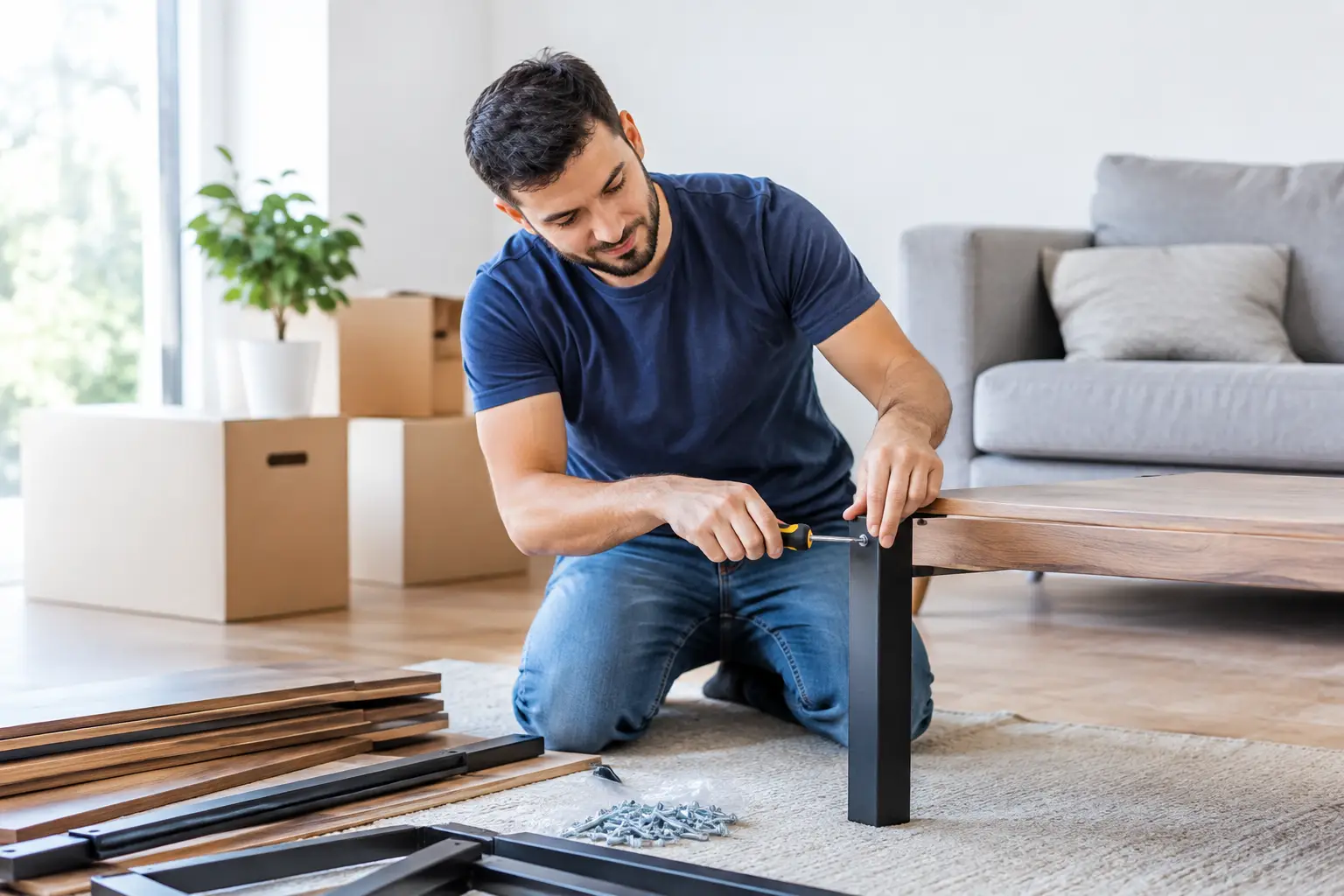
A Guide to Furniture Reassembly After a Move
Our guide to furniture reassembly explains how to protect parts, rebuild safely and know when to call insured movers for practical help after moving well.
A dismantled bed frame, a wardrobe in six panels and a bag of unlabelled fixings can turn moving day into an unwanted second job. This guide to furniture reassembly sets out a practical order of work, the checks worth making and the point at which professional help is the safer option.
Reassembly is not simply about getting furniture upright again. Done badly, it can leave a wardrobe unstable, strip the thread in a chipboard panel or damage a floor before the first night in your new home. A little preparation saves time, protects your belongings and helps the move finish properly.
Start furniture reassembly with the right parts
Before opening a toolbox, bring all the components for one item into the room where it will stay. Reassembling a large wardrobe in a hallway, then trying to manoeuvre it upstairs, is usually harder than carrying the panels up individually. Measure awkward staircases, tight landings and alcoves before you begin.
Lay a blanket, cardboard sheet or dust sheet on the floor. This prevents scratches on both the furniture and the flooring, particularly with painted panels, glass shelves and laminate finishes. Keep children and pets away from the work area while loose fittings, tools and heavy panels are out.
For each item, check that you have the correct panels, backboards, brackets and fittings. If parts were bagged during dismantling, the job should be straightforward. If they were not, separate the fixings by size and type rather than tipping everything into one pile. Cam locks, dowels, screws and drawer runners may look similar, but using the wrong one can damage the unit.
A basic kit is normally enough: screwdrivers, Allen keys, a rubber mallet, a tape measure, a spirit level and a drill with suitable bits where the manufacturer permits it. Avoid overtightening with a power driver. Flat-pack furniture is commonly made from particleboard or MDF, and too much force can tear out the fixing or crack the surface.
Use the correct order for furniture reassembly
The best order is usually the reverse of dismantling. Build the main frame first, square it up, then fit structural pieces such as rails, backboards and centre supports before adding doors, drawers or shelves. Do not fully tighten every fixing at the start. Leave a little adjustment until the frame is aligned, then tighten gradually and evenly.
For wardrobes and bookcases, assemble the carcass on the floor only if there is enough ceiling height to lift it safely. In many UK homes, tall units need to be built upright in position. Check the instructions or estimate the diagonal clearance before committing. Forcing a completed unit upright can split joints or damage the ceiling.
Back panels matter more than they appear to. They help keep a wardrobe or cabinet square, so fit them carefully and check the corners are at even angles before securing them. If the unit rocks or doors sit unevenly, do not carry on and hope it settles. Loosen the relevant fittings, square the frame and try again.
Once the main structure is stable, fit doors and drawers. Hinges often need small adjustments after a move, especially if the floor is uneven. Use a spirit level on the cabinet first. A level unit makes it much easier to set consistent gaps between doors and stop drawers from sliding open.
Beds need extra checks
A bed may look simple, but it carries weight and movement every night. Make sure side rails are attached to the correct ends, centre beams are seated properly and all bolts are tightened once the frame is square. Slats should sit securely in their holders without lifting at the ends.
For ottoman beds, gas-lift mechanisms need particular care. They are under tension and can be hazardous if fitted incorrectly. Follow the manufacturer’s instructions precisely and do not test the lift until the mattress is in place if the instructions require its weight. If brackets are bent, damaged or missing, stop and arrange a replacement rather than improvising.
Tables, desks and shelving should be levelled
Tables and desks often develop a wobble after reassembly because one leg has been tightened while the frame is twisted. Place the item on a flat surface, apply gentle pressure to identify the high corner, then loosen and retighten the relevant bolts while the frame sits flat.
Tall shelving units, display cabinets and freestanding wardrobes should be secured to the wall where recommended. This is especially important in homes with children. Find a suitable solid fixing point and use fixings appropriate to the wall type. Plasterboard requires a different solution from masonry, and a screw into an unsuitable wall can fail without warning.
Do not guess with missing instructions or fittings
Missing instructions are common after a move, but guessing is rarely the quickest route. Look for a model number on the back, underside or inside of the unit and obtain the correct manual from the retailer or manufacturer. A similar-looking assembly guide may use different fixings, hole positions or load limits.
If fittings are missing, identify exactly what is needed before buying replacements. A screw that is too long may pierce a finished surface; one that is too short may not support the joint. Take the original fitting, if available, to a hardware shop, or measure its length, thread and head type accurately.
Do not substitute structural bolts with ordinary wood screws, glue damaged joints without checking the construction, or remove safety brackets because they are inconvenient. These shortcuts can make a unit unsafe and may make later repairs more difficult.
Know when to arrange professional assembly
Some furniture is well suited to a careful DIY rebuild. A straightforward bedside table or standard dining table can often be completed in under an hour with the right parts. Large fitted-style wardrobes, bunk beds, heavy solid-wood units, complex office desks and furniture with lifting mechanisms are different. They take time, space and a confident pair of hands.
Professional assembly is useful when the item is valuable, time is limited or there is a safety concern. It can also make sense after a long move, when you need beds, storage and a usable workspace ready quickly rather than spending the evening sorting through screws.
An experienced removals team can dismantle, transport and reassemble suitable furniture as part of the move, reducing the chance of lost components and unnecessary handling. For customers moving across Berkshire, London or the surrounding counties, HomeGo Removals & Packing Ltd can provide practical furniture assembly support alongside removal and packing services. Ask what is included in the fixed-price quote before booking, particularly for wall-mounted items, specialist beds or furniture that needs more than two people to handle.
Check every item before calling the job finished
Once an item is assembled, test it as it will be used. Open and close drawers, check doors do not catch, sit gently on chairs, and make sure bed frames do not shift or creak excessively. Look underneath for spare fittings before throwing away packing materials.
Then complete a final safety check. Heavy furniture should not rock, sharp edges should not be exposed, and nothing should obstruct escape routes or narrow hallways. Keep spare fittings and assembly manuals together in a labelled envelope or small container. You will be glad you did when the furniture moves again, a drawer runner needs replacing or a shelf has to be adjusted.
Furniture reassembly goes more smoothly when it is treated as part of the move, not an afterthought at the end of a tiring day. Build the essentials first, work carefully on the larger pieces, and leave anything uncertain or safety-critical to people with the right tools and experience.
Get a free fixed written quote in 2 mins
Insurance up to £50,000 included · No cancellation fees · Free dismantling & reassembly

Our team of fully-insured removal specialists helps families across Slough, Windsor, Maidenhead and the wider Berkshire area move home every week. We pack, load, drive and unload boxes every day — every guide on this blog comes from real jobs, not theory.
Reviewed & fact-checked by Allah Nazar Ihsan — Founder & Managing Director, HomeGo Removals & Packing Ltd
Planning your move?
Get a free, no-obligation written quote from Berkshire's trusted independent removers. We're answering the phone right now — 24 hours a day, 7 days a week.