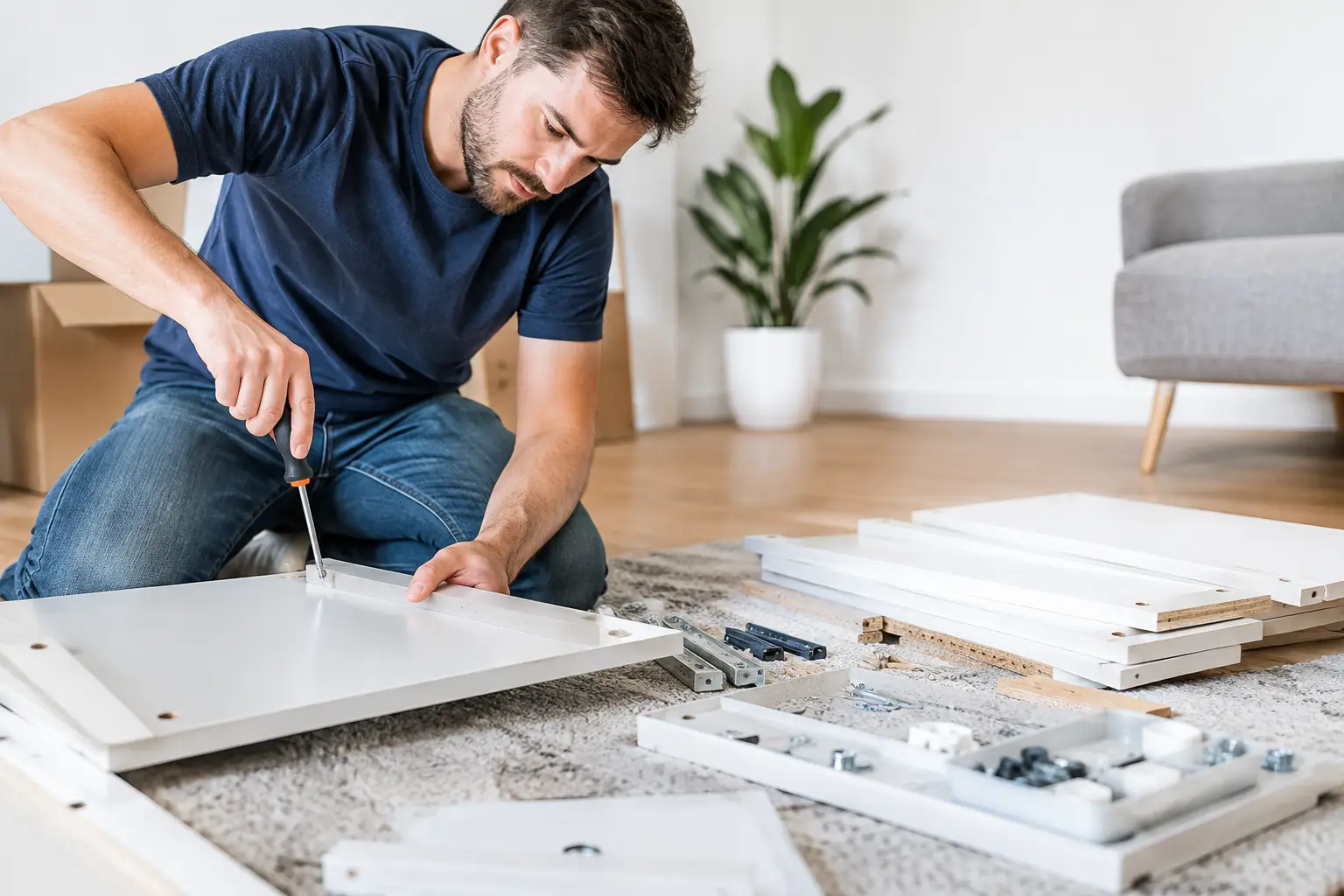
How to Dismantle Flat Pack Furniture Safely
Need to dismantle flat pack furniture before moving? Use these practical steps to protect panels, save space and make reassembly easier at your new home.
A wardrobe that fitted neatly into a bedroom can become the most awkward item on moving day. It may not clear a stairwell, turn on a landing or fit safely through the front door. When you need to dismantle flat pack furniture, doing it in the right order protects the panels, keeps the fittings together and prevents a stressful rebuild at the other end.
Flat pack furniture is designed to be assembled once, but many items can be taken apart and rebuilt successfully. The key is knowing when dismantling will help, when it creates more risk, and how to keep every component organised.
Decide whether dismantling is worth it
Not every item needs to come apart. Small bedside tables, compact bookcases and sturdy drawer units can often travel intact, provided they fit through the property safely and can be protected in the vehicle. Moving them whole also avoids weakening the joints through repeated assembly.
Dismantling is usually the sensible option for large wardrobes, bed frames, tall shelving units, desks with wide tops and modular storage. Measure the widest panel, then measure doorways, hallways, lifts, stair turns and the access route at both properties. Do this before moving day, not while a packed van is waiting outside.
There is a trade-off. Flat pack joints commonly use cam locks, wooden dowels and particleboard fixings. Each time a screw is tightened into chipboard, the hole can lose a little grip. If the furniture is already loose, swollen from damp or heavily worn, transporting it intact may be safer than taking it apart. A professional removals team can assess difficult items and plan the safest route.
Prepare the space before you dismantle flat pack furniture
Clear enough floor space to lay panels down without leaning them against a wall. A clean carpet, large blanket or flattened cardboard is useful because it reduces scratches and stops small fittings rolling away. Keep children and pets out of the work area, particularly when tools and sharp screws are on the floor.
Take clear photographs before touching anything. Photograph the completed item from each side, then take closer shots of hinges, drawer runners, brackets, cable holes and unusual fittings. These photos are often more useful than an old instruction booklet when it is time to rebuild.
If you still have the manufacturer’s instructions, keep them open on a phone or print them out. If not, look for a product code on the back panel, inside a drawer or underneath the unit. Avoid relying on memory, especially with wardrobes and beds that have several similar-looking panels.
Use the right tools and protect the fittings
Most flat pack furniture can be dismantled with a screwdriver, an Allen key and, occasionally, a small adjustable spanner. Use the correct size wherever possible. A loose screwdriver head can damage screw slots, while forcing the wrong Allen key can round off the fitting.
Keep a few small sealable bags, masking tape and a marker pen nearby. Put fittings from each section into a separate bag and label it clearly, such as “wardrobe doors”, “bed frame centre rail” or “desk drawers”. Tape the bag to the largest related panel or keep all bags in one clearly marked box that travels with you rather than in a separate load.
Do not put loose screws in a coat pocket, kitchen drawer or random carrier bag. Missing one specialist bolt can delay reassembly far longer than the dismantling itself.
Take it apart in reverse order
Start by emptying the furniture completely. Remove clothes, files, books and drawers before undoing a single fixing. A wardrobe or bookcase is much easier to handle when the weight has been removed, and there is less chance of a panel flexing or collapsing.
For a wardrobe, take off the doors first if they are heavy or likely to swing. Support the door while a second person removes the hinges. Then remove shelves, hanging rails, drawers and back panels before separating the main frame. The thin backboard is especially prone to cracking, so lift it away carefully rather than bending it.
For a bed frame, remove the mattress and slats, then undo the central support and side rails. Keep left- and right-hand components labelled if they are not interchangeable. With desks, remove drawers and detachable tops before taking apart the legs or side panels.
Work slowly and avoid pulling panels apart by force. Cam locks usually need a partial turn to release, not a full turn. If a joint will not separate, check for a hidden screw, locking bracket or dowel that is still engaged. Forcing a particleboard panel can tear the surface around the fitting and make the item unstable when rebuilt.
Label panels so reassembly is straightforward
Furniture parts can look nearly identical once they are stacked. Put a small piece of masking tape on the hidden edge of each panel and write a simple label: “left side”, “top”, “rear rail” or “shelf 2”. Mark the direction too where helpful, such as an arrow for the front or top edge.
Do not write directly on visible surfaces. Permanent marker can show through pale laminate, and adhesive labels may pull away a delicate finish. Masking tape is usually easy to remove, but test it on an unseen area first if the furniture has a fragile veneer.
Keep matching pairs together. For example, wrap bed rails in a blanket as one bundle, and tape the slats together once they are dry and clean. This keeps the load organised and helps the removals team identify what belongs together.
Wrap and load flat pack panels properly
The corners and edges are the vulnerable points. Wrap individual panels in removal blankets, thick cardboard or protective furniture covers, then secure the wrapping without taping directly onto the finish. Glass doors, mirrors and glazed shelves need separate protection and should be clearly marked as fragile.
Panels should travel upright where practical, with padding between them. Laying long chipboard panels flat beneath heavy boxes can make them bow or crack. Avoid storing them in damp garages, sheds or gardens before the move, as moisture can cause swelling along unfinished edges.
Drawers can be wrapped separately, but do not load heavy items inside them. Drawer runners bend easily when overloaded, and a loose drawer can damage the cabinet during transit. Secure doors, rails and long narrow parts so they cannot shift in the vehicle.
Know when to call for professional help
Some jobs are simple enough to manage yourself, but a large wardrobe on an upper floor, a heavy bed with an integrated storage base or furniture near a narrow staircase is different. The risk is not only damage to the item. There is also a real risk of trapped fingers, strained backs, damaged walls and broken glass.
Professional support is particularly useful when you are packing a whole home, moving at short notice or dealing with office furniture that must be ready for use quickly. An experienced team can dismantle, wrap, transport and reassemble suitable items as part of the move, rather than leaving you with a pile of panels after a long day.
HomeGo Removals & Packing Ltd provides insured removals, packing and furniture assembly support across Berkshire and surrounding areas, with fixed-price quotes and flexible booking options for planned or urgent moves.
Rebuild without damaging the furniture
When you arrive, allow any cold or damp furniture to reach room temperature before assembling it. Check the panels against your photos and labels, then lay out the fittings by section. Start the frame on a level surface and only tighten screws fully once the structure is square and every panel is correctly positioned.
Do not overtighten screws in chipboard. Stop once the fitting is firm. If a hole has become loose from previous assembly, do not simply force in a larger screw, as this can split the panel. A suitable repair may be possible, but it depends on the fitting and the load the joint needs to carry.
Take the same care at the end of the job as you did at the start. A correctly rebuilt wardrobe, bed or desk should stand level, have no wobble and open smoothly. That extra ten minutes of checking gives you furniture that is ready to use, not another problem to deal with after moving day.
Get a free fixed written quote in 2 mins
Insurance up to £50,000 included · No cancellation fees · Free dismantling & reassembly

Our team of fully-insured removal specialists helps families across Slough, Windsor, Maidenhead and the wider Berkshire area move home every week. We pack, load, drive and unload boxes every day — every guide on this blog comes from real jobs, not theory.
Reviewed & fact-checked by Allah Nazar Ihsan — Founder & Managing Director, HomeGo Removals & Packing Ltd
Planning your move?
Get a free, no-obligation written quote from Berkshire's trusted independent removers. We're answering the phone right now — 24 hours a day, 7 days a week.