How to Move Heavy Furniture Without Injury
Learn how to move heavy furniture safely with planning, lifting techniques and the right equipment. Know when an insured removal team is the safer choice for your home.
A solid oak wardrobe, a sofa that will not clear the hallway, or a washing machine on an upper floor can turn moving day into a safety issue very quickly. Knowing how to move heavy furniture is less about brute strength and more about preparation, control and knowing when to get help. A damaged wall can be repaired. A back injury can stop a move completely.
Before you lift anything, decide whether the item is genuinely manageable. If it is awkward, unusually heavy, valuable, needs to go upstairs, or has to pass through a tight doorway, professional help is often the sensible option. A fully insured removal team has the people, handling equipment and experience to move difficult items without gambling with your property or your health.
Plan the route before moving heavy furniture
Do not start by picking up the item. Start by walking the route from its current position to where it needs to go. Measure doorways, corridors, staircases, lifts and turns, particularly when moving large wardrobes, American-style fridge freezers, corner sofas or office cabinets.
Check the furniture itself too. Measure its widest, tallest and deepest points, then compare them with the narrowest part of the route. Remember that skirting boards, banisters, radiators and door handles reduce the available space. If the piece only fits when tilted, make sure there is enough headroom and that everyone carrying it understands the manoeuvre before you begin.
Clear the route completely. Remove rugs, shoe racks, lamps, small tables, children’s toys and anything else that could catch a foot or force someone to change direction suddenly. Keep pets and children in another room until the job is finished. Good lighting matters, especially in stairwells, garages and during an evening move.
If you are moving furniture into a van or lorry, plan where it will be placed before loading. Heavy items should sit low, upright where appropriate, and close to the front bulkhead. They must be secured so they cannot shift in transit.
Empty, dismantle and protect the item
The safest heavy item is the one that has been made as light and compact as possible. Empty drawers, cupboards and shelves. Books make a bookcase far heavier than it looks, while clothes, paperwork and kitchenware can turn a manageable chest of drawers into an unsafe load.
Remove loose shelves, glass panels, mirrors and detachable legs where possible. Take doors off hinges if they create a tight fit, but keep screws, fittings and brackets together in a labelled bag. Photograph complex furniture before dismantling so reassembly is quicker at the other end.
Some pieces should not be dismantled without care. Flat-pack furniture may weaken if it is repeatedly taken apart, and older wardrobes can lose their shape once the back panel is removed. It depends on the construction, condition and distance of the move. If an item is fragile or high value, protection and professional handling may be better than forcing a dismantling job.
Use removal blankets, furniture covers or thick padded material to protect corners and finished surfaces. Secure blankets with tape or straps around the covering, not directly against polished wood, veneer or painted surfaces. Cardboard corner protectors are useful for tables, cabinets and frames that could mark walls or chip easily.
Use the right equipment to move heavy furniture
The right equipment reduces strain, but it does not replace sensible handling. For most home moves, useful equipment includes:
- Furniture sliders for moving sofas, cabinets and beds across carpet, laminate or hard flooring.
- A sack truck or appliance trolley for washing machines, tumble dryers, fridges and boxed items.
- Lifting straps to share weight between two people and keep hands clear of awkward edges.
- Moving blankets, ratchet straps and protective covers for loading and transport.
- Work gloves with grip and safety footwear with a firm, non-slip sole.
Sliders are ideal for moving furniture across a level room, but they are not for stairs, thresholds or uneven ground. A sack truck can make appliances easier to transport, yet it must be used correctly: keep the load balanced, strap it in place and tip it only enough to roll. Never try to control a heavy appliance down a staircase alone.
Avoid improvised solutions such as using office chairs, loose boards or wheeled bins. They can move unexpectedly, damage floors and put fingers or feet in the path of the load.
How to lift heavy furniture safely
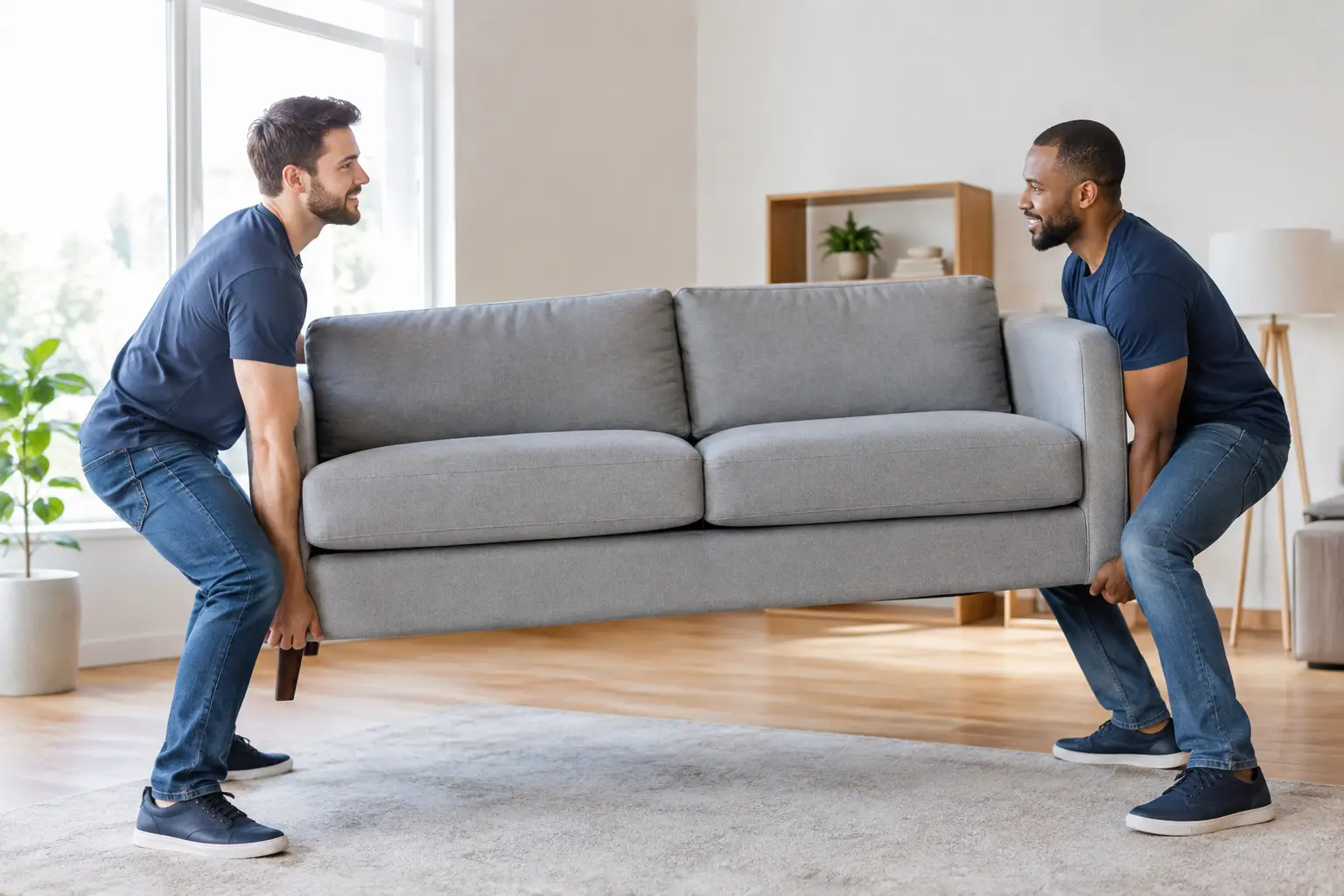
Heavy furniture should be carried by at least two capable adults where the item and route allow it. Choose people who can communicate clearly and are wearing suitable footwear. Do not assume that an extra person automatically makes the job safer. Three people around a bulky item can make grip and visibility worse if there is no clear plan.
Agree who is leading before lifting. One person should call the instructions: “lift”, “stop”, “turn”, “down” and “rest”. Use short, clear commands. If anyone loses grip, feels pain or cannot see where they are stepping, put the furniture down safely and reset. Do not try to save a slipping load with your back, fingers or foot.
Stand close to the item with feet around shoulder-width apart. Bend at the knees and hips while keeping your back in a neutral position. Grip a solid part of the frame, not a drawer handle, decorative trim or removable panel. Lift with your legs, keep the load close to your body and avoid twisting. To change direction, move your feet rather than rotating your torso under weight.
For tall furniture such as wardrobes and bookcases, keep it as upright as possible unless the route requires a controlled tilt. Tilting can reduce height under a doorway, but it changes the centre of gravity quickly. Take it slowly and protect both the furniture and surrounding walls.
Stairs, tight turns and awkward items need extra care
Stairs are where DIY furniture moves become most risky. The person on the lower end carries more of the weight, has less room to move and may not be able to see the next step. If the item is too wide for the staircase, too heavy to control, or requires lifting above shoulder height, stop and arrange professional removal support.
Never carry large furniture with one person walking backwards down stairs if it can be avoided. It limits visibility and leaves little room to recover from a slip. Use stair protection where needed, keep the route dry and take breaks before tiredness affects judgement.
Appliances need their own precautions. Washing machines should be disconnected properly, drained and secured with transit bolts if available. Fridges and freezers should be emptied, defrosted and dried before moving. Many manufacturers recommend keeping refrigeration appliances upright; if one has been laid down, check its instructions before switching it back on.
Sofas, wardrobes and beds can often be moved more safely with partial dismantling or a different angle through the property. If access is still impossible, a removals team may be able to use specialist handling methods after assessing the route. Do not force an item through a doorway just because it is nearly through. That is how door frames, upholstery and hands get damaged.
Protect floors, walls and the property
Moving heavy furniture safely is not only about lifting. Floors, walls and communal areas need protection too. Cover vulnerable carpets and hard floors, especially near entrances and along narrow hallways. Use blankets or cardboard on painted corners and banisters where a large item may brush past.
If you live in a flat, check building rules before moving. Some blocks require lift bookings, protective coverings or permission for large removals. Book the loading bay or parking space if one is available. A long carry from the vehicle increases the risk of fatigue, delays and accidental damage.
When loading a vehicle, keep drawers and doors taped or strapped closed, but do not rely on tape alone to hold furniture together. Use proper securing straps inside the vehicle. Load the heaviest items first, fill gaps with protected lighter pieces, and avoid stacking anything heavy on upholstered furniture or delicate tops.
Know when to book professional movers
There is no prize for moving a piano, large safe, solid wood wardrobe or American fridge freezer yourself. The cost of hiring help can be far lower than repairing flooring, replacing furniture or dealing with an injury. This is particularly true for same-day moves, properties with stairs, long-distance relocations and tight access in older homes or flats.
HomeGo Removals & Packing Ltd can provide practical moving support across Berkshire and surrounding areas, including packing, furniture dismantling and reassembly, protected transport and insured handling. Fixed-price quotes help you decide the cost upfront, rather than finding extra charges halfway through a difficult move.
If you do tackle smaller items yourself, work slowly and stop early when the move is becoming unsafe. The best way to move heavy furniture is the method that gets it into place without injury, damage or a stressful last-minute problem.
Get a free fixed written quote in 2 mins
Insurance up to £50,000 included · No cancellation fees · Free dismantling & reassembly

Our team of fully-insured removal specialists helps families across Slough, Windsor, Maidenhead and the wider Berkshire area move home every week. We pack, load, drive and unload boxes every day — every guide on this blog comes from real jobs, not theory.
Reviewed & fact-checked by Allah Nazar Ihsan — Founder & Managing Director, HomeGo Removals & Packing Ltd
Planning your move?
Get a free, no-obligation written quote from Berkshire's trusted independent removers. We're answering the phone right now — 24 hours a day, 7 days a week.