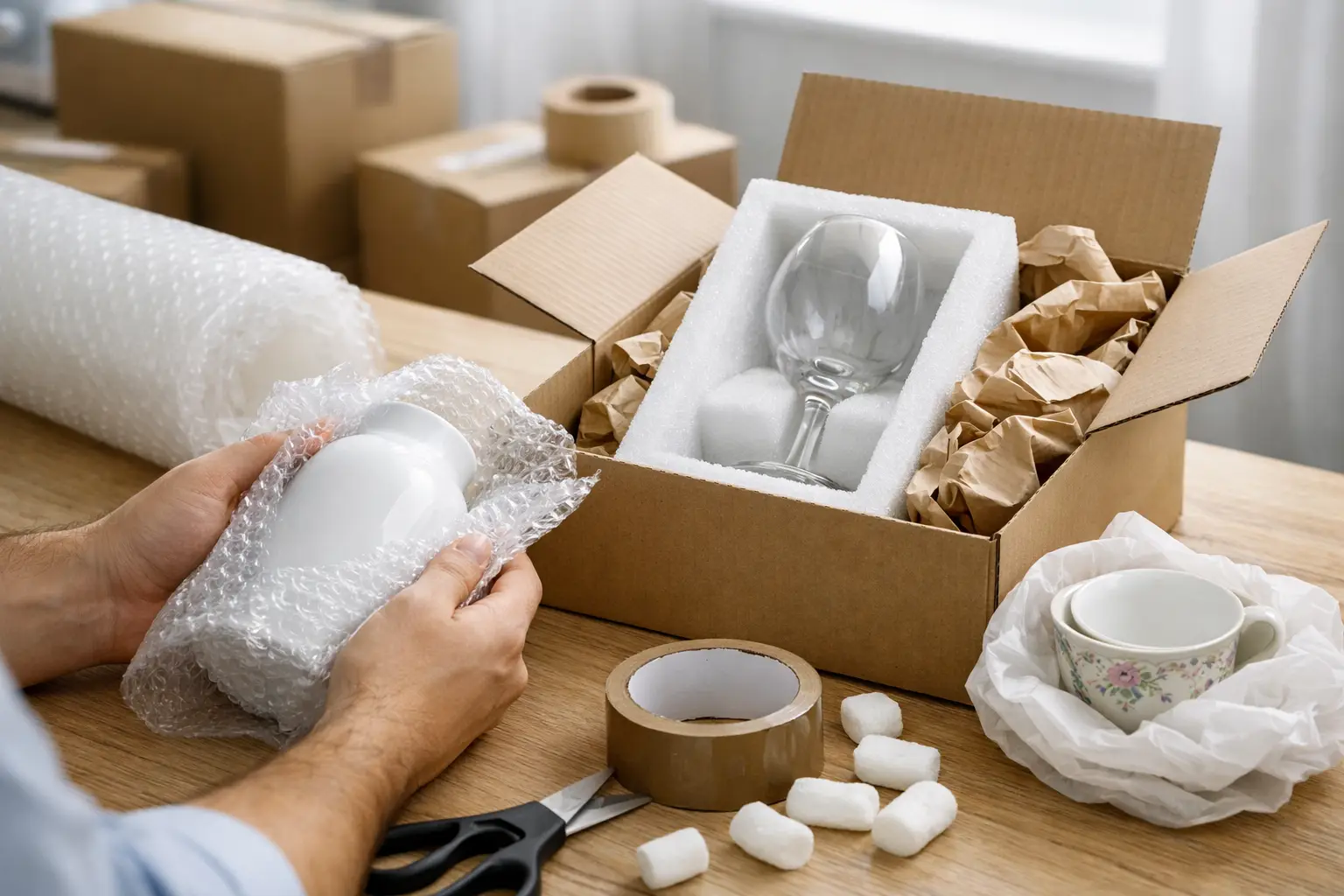
How to Pack Fragile Items Without Breakages
Learn how to pack fragile items for moving, using proper wrapping, strong boxes and safe loading. Reduce damage and unpack with confidence at a new home.
A single chipped glass can turn unpacking day into an expensive frustration. Knowing how to pack fragile items properly is less about using endless bubble wrap and more about preventing movement at every stage: inside the wrapping, inside the box and inside the removal vehicle.
For a house move, start fragile packing earlier than you think. Glassware, crockery, mirrors, lamps, electronics and ornaments take longer to prepare than books or clothes. Packing them calmly, in the right order, gives you better protection and makes loading day much simpler.
Get the right packing materials first
Weak boxes and improvised wrapping are common reasons fragile belongings get damaged. Supermarket boxes may be fine for lightweight, non-breakable items, but they are rarely the best choice for china, glass or electronics. Use clean, dry, double-walled moving boxes where possible, especially for heavier breakables.
You will need several types of protective material: packing paper or plain unprinted paper, bubble wrap, strong parcel tape, cardboard dividers, box filler and marker pens. Towels, bedding and clean clothing can provide useful extra cushioning, but should not be the only protection around delicate pieces.
Avoid packing fragile items in oversized boxes. A large box filled with plates becomes heavy quickly, is harder to carry safely and is more likely to crush at the bottom. Small and medium boxes are the safer choice for dense, breakable contents.
How to pack fragile items step by step
The key rule is simple: each item should be wrapped, the box should be cushioned and there should be no empty space left for contents to shift.
Start with a padded base
Build the box properly and tape across the bottom seam in both directions. Add a thick layer of crumpled packing paper, bubble wrap or soft linen at the base. This creates a cushion against bumps when the box is set down.
Do not use loose newspaper directly against valuable glass, porcelain or light-coloured surfaces. Ink can transfer, particularly if items are stored for a while. Plain packing paper is cleaner and easier to work with.
Wrap one item at a time
Place each glass, mug, vase or ornament on a sheet of packing paper. Fold in the corners and roll the item until it is fully covered. Tape is usually unnecessary for individual pieces unless the wrapping keeps coming loose.
For glasses and stemware, gently fill the inside with crumpled paper first. Wrap the stem carefully, then use additional paper or bubble wrap around the bowl. Pack glasses upright where practical, with heavier pieces at the bottom and lighter ones above.
Plates should be wrapped individually and packed on their edge rather than laid flat. Like records, they are stronger when standing vertically. Put cardboard between particularly valuable plates and use a plate box or sturdy small carton if you have one.
Protect corners, edges and lids
Corners are where damage often starts. Wrap picture frames, mirrors and flat-screen televisions with corner protectors or folded cardboard before adding moving blankets or bubble wrap. Never place a mirror or framed picture loose against other furniture in the lorry.
Lids, handles and spouts need separate attention. Remove loose lids from teapots, casserole dishes and jars, wrap them individually, then place them beside the main item only when both are protected. Tape cabinet doors and drawers closed only if the surface will not be marked, or use stretch wrap around the furniture instead.
Fill every gap in the box
Once wrapped items are in the carton, fill gaps with crumpled paper, bubble wrap or soft textiles. Gently move the closed box from side to side. If you can hear or feel contents moving, add more filler.
Finish with a layer of padding on top before closing the box. The lid should sit flat without force. A bulging box is difficult to stack safely; a half-empty box gives items too much room. Repack it if needed rather than hoping it will be fine.
Pack different fragile belongings the right way
Not every delicate item needs the same treatment. The value, shape and weight of the item should determine how much protection it gets.
Crockery and kitchen glass
Pack plates vertically in small boxes. Bowls can be nested with paper between each one, but avoid stacking too many in a single bundle. Mugs should be wrapped individually, with extra protection around the handles.
For wine glasses, champagne flutes and delicate crystal, use cell dividers if available. If not, wrap each piece generously and keep the box light enough to carry with both hands.
Mirrors, pictures and artwork
Use a purpose-made mirror carton for large mirrors and framed artwork. Cover the glass with protective film or masking tape in a loose criss-cross pattern to help contain fragments if the glass breaks. Do not apply tape directly to antique frames, painted finishes or delicate surfaces.
Clearly mark these boxes or wrapped items as fragile and keep them upright. They should be loaded against a secure flat surface, not placed under boxes or squeezed between unstable furniture.
Lamps, electronics and televisions
Remove bulbs, shades, cables and detachable parts. Wrap lamp bases and shades separately. Lampshades are easily crushed, so use a box that gives them space without allowing them to move.
Original packaging is best for televisions, monitors, speakers and gaming equipment because it is designed for the item. If you no longer have it, use a correctly sized box, foam or thick padding around the screen, and a rigid cardboard layer over the front. Keep electronics dry and avoid putting heavy items on top.
Sentimental and high-value items
Jewellery, passports, medication, important documents, cash and very small valuables should travel with you rather than in the removal vehicle. The same applies to irreplaceable family photographs and fragile collectibles that would be difficult to insure or replace.
For antiques, sculptures or unusually shaped pieces, standard packing may not be enough. A professional packing service can provide tailored wrapping and safer handling, particularly where an item needs to be moved down narrow stairs or through tight doorways.
Label boxes so they are handled properly
Writing only “Fragile” on a carton is helpful, but it does not tell anyone what is inside, which way it should face or where it belongs. Label at least two sides of every fragile box with the destination room, a short description and handling instructions such as “This way up” where relevant.
Be specific: “Kitchen - wine glasses - fragile” is more useful than “Kitchen stuff”. This also helps you prioritise boxes when unpacking. You can place essential kitchen items, a lamp and everyday glassware where you need them first, rather than opening every carton in search of one item.
Load fragile boxes last, then secure them
Good packing can still be undone by poor loading. Fragile boxes should not go at the bottom of a tall stack or underneath furniture. Load them after heavier cartons and place them on a level, secure surface where they cannot slide.
Keep boxes upright if the contents were packed that way. Use moving blankets, straps and sensible stacking to prevent movement during transport. A box marked fragile is not automatically protected if it is loose in the back of a van.
If you are using a removals team, point out any boxes containing glass, artwork, electronics or items with special handling requirements before loading begins. Clear information helps the crew plan the safest position in the vehicle.
Know when professional packing is worth it
Packing fragile belongings yourself can save money when you have time, suitable materials and a manageable amount to move. It may be less practical if you are moving at short notice, packing a large family home, handling antiques or balancing the move around work and children.
Professional packers work systematically, use appropriate cartons and can prepare a full property far more quickly than most households. For customers moving across Berkshire, London or the surrounding counties, HomeGo Removals & Packing Ltd can handle the packing as well as the move, with fixed-price quotes and insured support.
Take your time with the items that cannot simply be replaced. A well-wrapped glass, a correctly sized box and a secure place in the vehicle are small decisions that make arriving at your new home feel a lot less stressful.
Get a free fixed written quote in 2 mins
Insurance up to £50,000 included · No cancellation fees · Free dismantling & reassembly

Our team of fully-insured removal specialists helps families across Slough, Windsor, Maidenhead and the wider Berkshire area move home every week. We pack, load, drive and unload boxes every day — every guide on this blog comes from real jobs, not theory.
Reviewed & fact-checked by Allah Nazar Ihsan — Founder & Managing Director, HomeGo Removals & Packing Ltd
Planning your move?
Get a free, no-obligation written quote from Berkshire's trusted independent removers. We're answering the phone right now — 24 hours a day, 7 days a week.