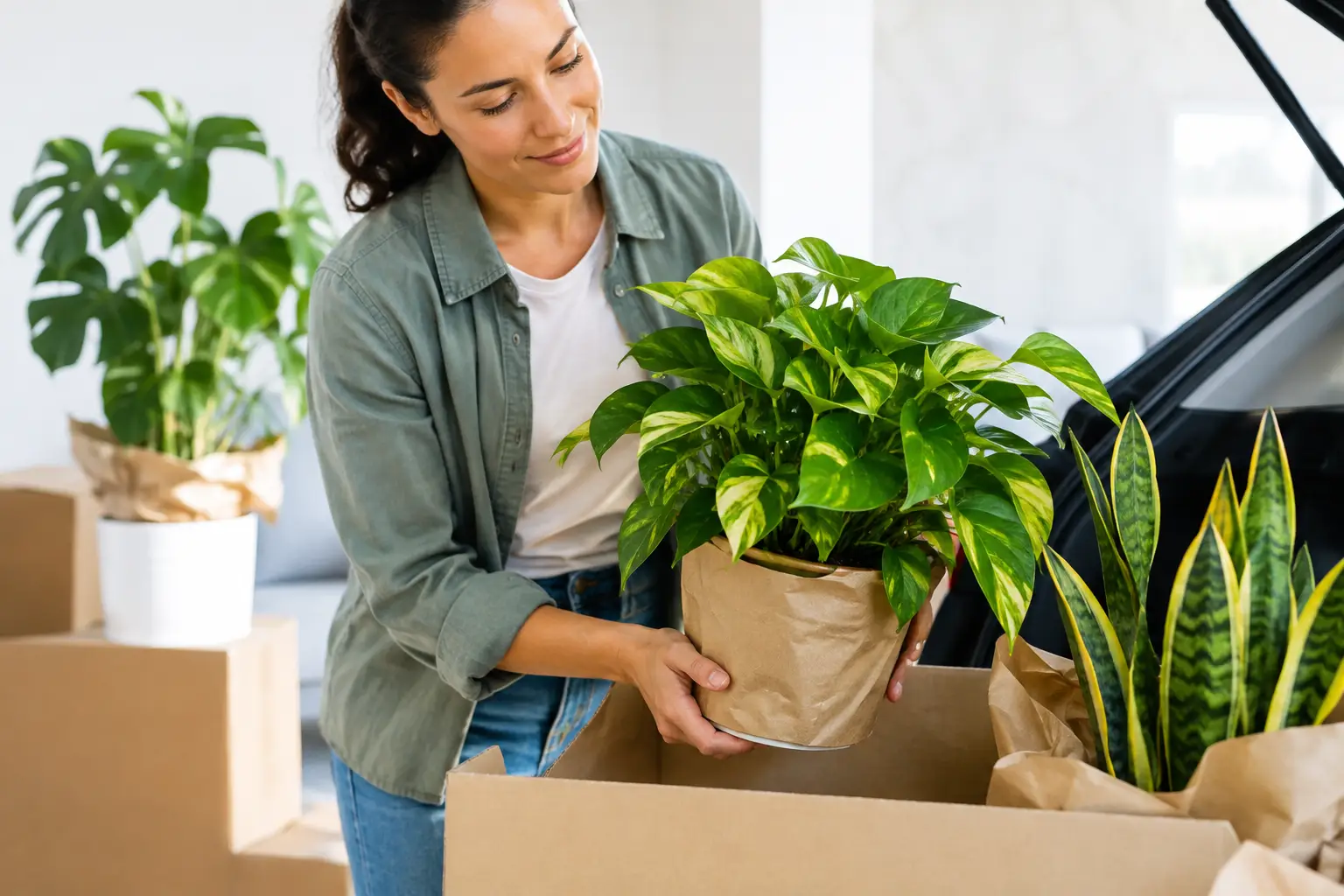
How to Transport Houseplants Safely When Moving
Learn how to transport houseplants safely during a home move, from packing pots and protecting leaves to managing temperature, water and unloading safely.
A moving day can be hard on plants. A pothos may tolerate a few hours in a box, but a tall fiddle-leaf fig, delicate orchid or heavy ceramic planter needs more thought. Knowing how to transport houseplants safely helps prevent snapped stems, water damage, cold shock and a stressful first week in your new home.
Plants are living items, not ordinary packing. Plan their move around temperature, light and stability, then give them priority when unloading.
Prepare plants several days before the move
Do not water every plant heavily the night before. Wet compost adds considerable weight, can leak into the vehicle and leaves roots sitting in cold conditions for longer. Water most houseplants two to three days before moving so the soil is lightly damp rather than sodden.
Check each plant for pests, damaged stems and loose soil. Remove dead leaves and any fallen debris from the pot. If you spot insects, isolate that plant and deal with the problem before it enters your new property. A move is not the time to spread fungus gnats, scale or spider mites across a whole collection.
Avoid repotting immediately before moving unless the existing pot is cracked or unsafe. Repotting disturbs roots, and transport is another source of stress. If a heavy plant is in a fragile ceramic pot, place the entire pot inside a sturdy plastic tub or strong crate instead of repotting it at the last minute.
For very large plants, gently tie long branches together with soft twine, fabric strips or plant ties. Do not pull stems tightly upright. The aim is to reduce movement, not force the plant into an unnatural shape.
How to transport houseplants safely in boxes and crates
Small and medium-sized plants travel best standing upright in strong, open-top boxes, plastic crates or lidded storage tubs with the lid left off. Choose containers only slightly wider than the pots so they cannot slide around on corners or roundabouts.
Line the base with newspaper, towels or packing paper to absorb minor spills and stop pots shifting. Fill gaps between pots with scrunched paper, towels or light blankets. Keep packing material around the pot, not pressed against foliage.
For trailing plants, loosely lift the vines on to the soil surface or around the pot rim before placing the pot in its box. This reduces the chance of vines being trapped beneath another container. Tall plants may need a taller carton with the top flaps left open, provided they are secured upright and protected from draughts.
Never stack boxes of plants. Even a light carton can crush leaves or tip a pot. Mark each box clearly with “This Way Up” and “Live Plants”, but do not rely on a label alone. Tell the removals team which containers need to stay upright and which plants are especially delicate.
Protect foliage without suffocating it
Leaves can tear when they rub against cardboard or other plants. For leafy specimens, create a loose sleeve from kraft paper, packing paper or a clean sheet. Start at the base, bring the material gently around the plant and secure it loosely near the pot. Leave space for air and do not tape paper directly to leaves.
Plastic bags are only suitable for brief protection from rain while carrying plants between the house and vehicle. Do not seal a plant inside plastic for a long journey. Condensation, heat and poor airflow can damage foliage surprisingly quickly.
Cacti and other spiky plants need separate handling. Wrap the pot, not the spines, then place it in a box packed firmly with paper around the container. Use thick gloves when lifting. For larger cacti, a loose cardboard collar can protect both the plant and the person carrying it.
Choose the right place in the vehicle
The best place for houseplants is usually the passenger area of a car or van where the temperature is more stable and you can check them easily. Keep them low on the floor or against a secure bulkhead, never loose on a seat where they can fall forward during braking.
If plants must travel in a removal vehicle, load them last and unload them first. They should not be placed beneath furniture, boxed in tightly by heavy items or left near doors that will open repeatedly. Ask whether the vehicle is heated if you are moving in cold weather.
Avoid leaving plants in a parked vehicle. In summer, direct sun through glass can make a car dangerously hot. In winter, an unheated vehicle can become cold enough to injure tropical plants within a short period. If your move involves collecting keys, cleaning or a long wait between properties, take plants with you where possible.
For local moves across Berkshire, London or the surrounding counties, most plants will manage a well-planned same-day journey without difficulty. Longer moves need more care. Stop overnight only if plants can be brought into accommodation, kept away from radiators and placed somewhere with moderate light.
Protect plants from cold, heat and wind
Temperature is often the main risk, particularly from October to March. Most common houseplants prefer temperatures above 12°C, while tropical varieties can suffer at lower temperatures. Wrap the outer box with blankets for insulation, and move plants quickly between the property and vehicle.
Do not place plants beside an open door while loading. Cold wind can damage tender leaves, even if the journey itself is short. On a warm day, keep them out of direct sunlight and do not position them beside a heater vent.
If frost is expected, consider moving plants in your own heated car rather than an unheated lorry. It may take two or three trips for a large collection, but that is preferable to exposing sensitive plants to freezing conditions. Some specialist or very large plants may justify a separate transport plan altogether.
What to do on moving day
Keep your plants together in one room until they are ready to load. This prevents someone from accidentally placing them in a wardrobe box or leaving them behind. Give them a final check for loose soil, unstable saucers and overhanging branches.
A simple plant-moving kit is useful: packing paper, towels, soft ties, gloves, spare boxes, tape, a marker pen and a small watering bottle. Keep the watering bottle for after arrival rather than soaking plants before they travel.
If you are using a professional removals team, mention the plants when requesting your quote. Be clear about the number of plants, any oversized pots, stairs, awkward access and whether there are fragile or valuable specimens. Insurance and transport arrangements can vary for live plants, so ask what is covered and whether you should move them yourself.
HomeGo Removals & Packing Ltd can help with the heavy lifting, packing and timed logistics around a house move, but it is sensible to agree plant handling requirements in advance. A fixed plan is safer than trying to make decisions at the kerbside.
Set plants up quickly after arrival
Unload plants before the main furniture where possible. Place them in a room with a stable temperature and indirect light while the rest of the move continues. Do not immediately put every plant into its final spot, especially if you are still opening doors, carrying furniture through rooms or adjusting the heating.
Check for snapped stems, spilled compost and damaged leaves. Brush loose compost back into the pot and water only if the soil is dry. A plant that was watered before the move may not need another drink for several days.
Expect some leaf drop after transport, particularly from ficus, calathea, citrus and other plants that dislike sudden changes. Give them time. Keep conditions consistent, avoid feeding for a few weeks and resist the urge to repot unless there is clear root or pot damage.
Your plants do not need a perfect journey. They need a short, stable trip, sensible packing and a calm place to recover. Make them one of the first things you settle, and they are far more likely to settle with you.
Get a free fixed written quote in 2 mins
Insurance up to £50,000 included · No cancellation fees · Free dismantling & reassembly

Our team of fully-insured removal specialists helps families across Slough, Windsor, Maidenhead and the wider Berkshire area move home every week. We pack, load, drive and unload boxes every day — every guide on this blog comes from real jobs, not theory.
Reviewed & fact-checked by Allah Nazar Ihsan — Founder & Managing Director, HomeGo Removals & Packing Ltd
Planning your move?
Get a free, no-obligation written quote from Berkshire's trusted independent removers. We're answering the phone right now — 24 hours a day, 7 days a week.