How to Transport Single Furniture Items Safely
Learn how to transport single furniture items safely, from measuring and packing to choosing the right insured man and van for collection and delivery.
A single sofa, wardrobe or washing machine can be harder to move than a whole room of boxes. It is heavy, awkward, easy to damage and often has to pass through tight hallways, stairwells or communal entrances. Knowing how to transport single furniture items properly helps you avoid injuries, scratched walls, broken furniture and last-minute delivery problems.
For many jobs, a professional single-item collection is the sensible choice. But whether you use a man and van or handle part of the job yourself, the same preparation makes collection and delivery quicker, safer and more predictable.
How to Transport Single Furniture Items: Start With Access
Before arranging transport, measure the item at its widest, tallest and deepest points. Then measure the route it needs to travel: internal doors, front doors, corridors, lifts, staircases, gates and any narrow turns. A wardrobe that fits through a doorway upright may need to be turned on its side, while a large sofa may need its feet removed before it will clear the hall.
Do not assume an item will fit because it entered the property originally. It may have been assembled in the room, brought in through another entrance, or delivered before flooring, radiators and other furniture reduced the available space.
At the collection and delivery addresses, check practical access as well. Tell the transport team if there are stairs, no lift, restricted parking, a gated development, a long walk from the road or a low entrance. These details affect the vehicle, number of movers and time needed for the job. Giving accurate information upfront is the best way to receive a fixed-price quote that stays fixed.
Decide Whether the Item Needs Dismantling
Some furniture is safer and easier to move in sections. Bed frames, wardrobes, dining tables and shelving units can often be dismantled, reducing the chance of damage on stairs or at doorways. Keep screws, brackets and fittings in a labelled bag taped securely to the main item where possible.
Not everything should be dismantled. Flat-pack furniture that has been assembled for years can become unstable once taken apart, particularly if fixings are worn or chipboard panels are damaged. Antique furniture, glued frames and some large cabinets are also best moved intact by experienced handlers. If reassembly is needed at the other end, arrange it before collection rather than treating it as an afterthought.
Prepare the Furniture for Collection
Remove drawers, shelves, loose cushions and detachable legs where practical. Empty every drawer and cupboard, even if the piece does not feel especially heavy. A loaded chest of drawers can shift during lifting, strain its runners and make the load unsafe for the people carrying it.
Clean and dry the item before wrapping it. Dirt trapped under a cover can rub against timber, leather or painted surfaces during transit. Take clear photos beforehand too, especially if the furniture is valuable, newly bought or being collected from a seller. Photographs provide a useful record of its condition.
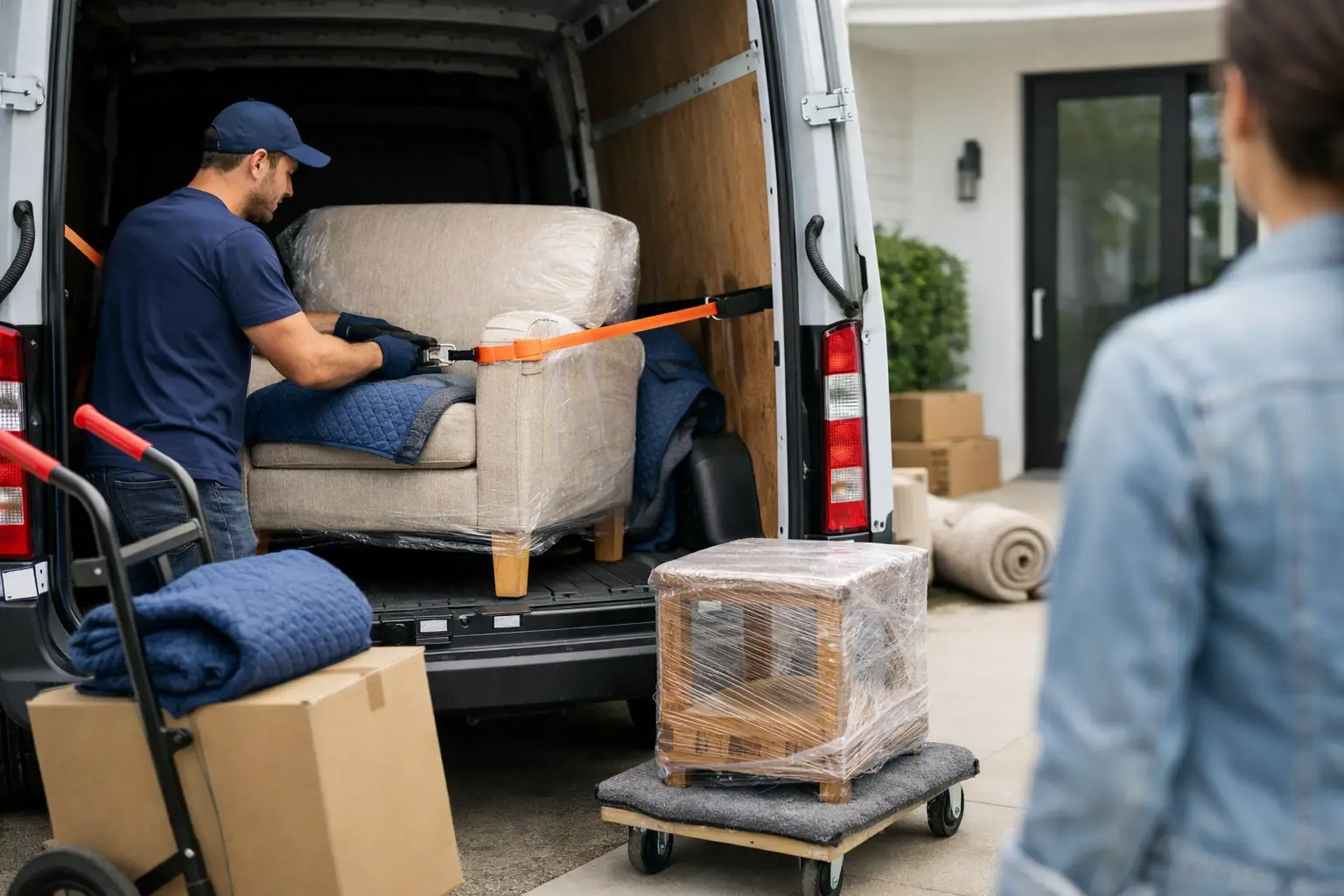
Protective materials matter more than a thin blanket thrown over the top. Furniture blankets protect corners and surfaces, while shrink wrap holds padding in place and keeps doors or drawers closed. Cardboard corner protectors are useful for tables, mirrors and cabinets. For glass, use a rigid protective layer rather than relying only on bubble wrap.
A professional vehicle should carry blankets, straps and handling equipment. If you are collecting an item yourself, do not skip these basics just because the journey is short. Most damage happens while lifting, loading and unloading, not while driving.
Choose the Right Vehicle and Equipment
The right vehicle depends on the item, access and distance. A small armchair might fit securely in an estate car with the seats folded down, but a three-seater sofa, freestanding cooker or solid wood sideboard normally needs a van. Never force furniture into a vehicle where it blocks the driver's view, prevents doors from closing properly or cannot be tied down.
The item should travel flat or upright according to its construction. Mattresses are best carried and transported flat when space allows. Mirrors and glass-topped furniture should be stored upright on their edge, protected and secured so they cannot move. Washing machines need their transit bolts fitted if available, while fridge freezers should be kept upright throughout transport.
For heavy or bulky pieces, use proper equipment. A sack trolley, furniture dolly, lifting straps and loading ramp reduce risk and make the work more controlled. Two capable people are usually the minimum for large furniture, but some items need more hands because of their size, weight or the route involved.
Do not try to carry a large item down stairs alone. The cost of a single-item removal is small compared with a back injury, damaged banister or broken appliance.
Load, Secure and Drive Carefully
Load the heaviest item first and position it against the front bulkhead of the van where possible. Keep the centre of gravity low and avoid stacking hard items against polished wood, upholstery or glass. Use furniture blankets between pieces, then secure the load with ratchet straps attached to suitable anchor points.
Straps should stop movement without being tightened so much that they crush a frame or mark soft upholstery. Check them again before setting off. On a longer journey, stop and inspect the load if road conditions are poor or the van has travelled over speed bumps, uneven roads or sharp bends.
Drive smoothly. Sudden braking, tight cornering and fast acceleration can shift even a well-packed load. Allow extra room for braking and take speed bumps slowly. If the item is being moved in your own vehicle, check that your insurance covers the journey and that the load is legal and secure.
Special Care for Appliances and Fragile Items
Appliances need more than lifting strength. Disconnect washing machines and dishwashers fully, drain residual water and secure hoses. For fridges and freezers, empty and defrost them in advance. After transport, leave the appliance upright for a suitable settling period before switching it on, particularly if it was tilted during handling.
For mirrors, marble tops, glass cabinets and delicate antiques, tell the transport provider exactly what is being moved. These items may need extra wrapping, a two-person carry and a dedicated position in the van. A cheap collection is not good value if the service is not equipped to protect the item.
When a Man and Van Is the Better Option
Self-collection can work for a light item, short distance and straightforward access. It becomes less practical when the furniture is heavy, expensive, awkwardly shaped or located above ground floor. It is also worth booking help when collecting from an online marketplace seller who expects a prompt collection slot, or when a landlord needs an item removed between tenancies.
Ask for a quote based on the actual job, not just the postcode-to-postcode distance. A reliable provider will want to know the item dimensions, pickup and delivery floors, lift availability, parking conditions, date, time window and whether dismantling, packing or assembly is required. Send photographs if the item is unusually large or fragile.
Check that the service is fully insured and clarify what is included. You should know whether loading, unloading, protective blankets, stairs, waiting time and reassembly are covered. Fixed-price quotes are particularly useful for single items because they remove uncertainty when access is more complicated than it first appears.
HomeGo Removals & Packing Ltd can arrange insured single-item transport across Berkshire and surrounding areas, with fixed-price quotes, same-day slots where available and practical help with packing or furniture assembly.
A Quick Collection-Day Check
Before the team arrives or you set off, make sure the item is empty, accessible and ready to move. Keep pets and children away from the carrying route, protect vulnerable flooring if needed, and reserve parking as close to the entrance as possible. At the delivery address, clear the final room before unloading so the furniture can be placed where it belongs rather than moved twice.
Take a final look at the item once it is in position. Check drawers, doors, legs and glass panels before the movers leave, then keep any fittings together until reassembly is complete. A few minutes of preparation turns a difficult single-item move into a controlled job rather than a problem waiting at the doorway.
Get a free fixed written quote in 2 mins
Insurance up to £50,000 included · No cancellation fees · Free dismantling & reassembly

Our team of fully-insured removal specialists helps families across Slough, Windsor, Maidenhead and the wider Berkshire area move home every week. We pack, load, drive and unload boxes every day — every guide on this blog comes from real jobs, not theory.
Reviewed & fact-checked by Allah Nazar Ihsan — Founder & Managing Director, HomeGo Removals & Packing Ltd
Planning your move?
Get a free, no-obligation written quote from Berkshire's trusted independent removers. We're answering the phone right now — 24 hours a day, 7 days a week.