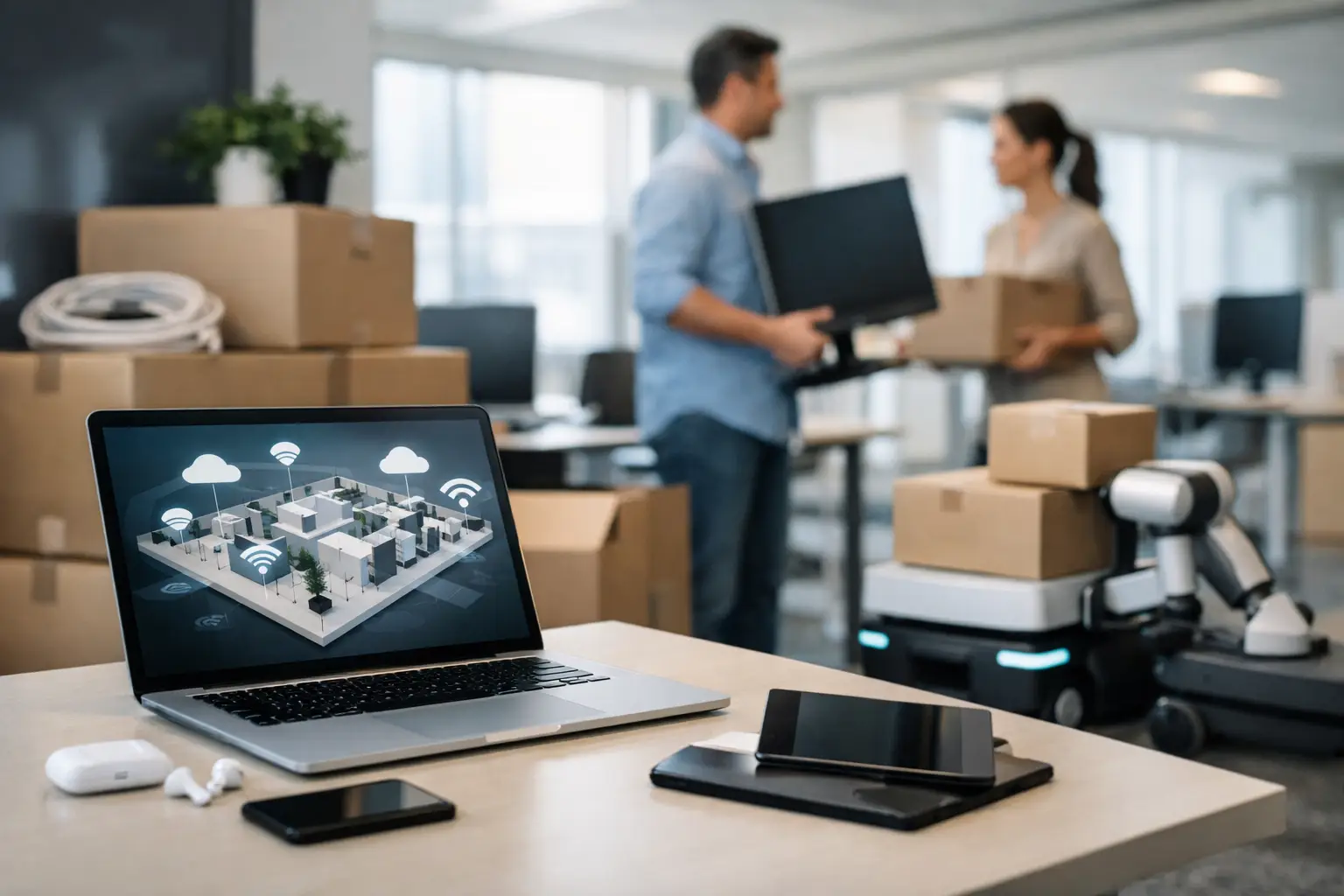
Office Relocation Technology Trends That Work
Office relocation technology trends can cut disruption, improve asset control and keep staff informed. Practical guidance for your next business move.
A missed monitor, an unlabelled pedestal drawer or a team arriving at the wrong entrance can delay an office move before the first desk is built. The most useful office relocation technology trends are not about buying complicated systems. They are about giving managers, staff and movers clearer information at the point it is needed.
For small and medium-sized businesses, the aim is simple: protect equipment, reduce downtime and get people working again quickly. Technology can help, but only when it supports a clear moving plan, sensible labelling and a properly coordinated removals team.
Office Relocation Technology Trends Worth Using
Digital inventories are replacing paper-only lists
A digital inventory is now one of the most practical tools in an office move. Instead of relying on a printed spreadsheet that quickly becomes out of date, businesses can record desks, chairs, screens, IT equipment, filing cabinets and specialist items in one shared file or inventory app.
The useful part is not simply counting items. Each asset can be assigned an owner, current location, destination room and condition. That creates accountability before packing starts and makes it easier to confirm that everything has arrived.
For a small office, a well-organised spreadsheet with photos may be enough. Larger sites with hundreds of assets may benefit from dedicated inventory software. The right choice depends on the size of the move and the value of the equipment. There is little benefit in paying for a complex platform if staff will not keep it updated.
QR codes improve desk and equipment tracking
QR-coded labels are becoming common because they are inexpensive, quick to scan and easy to understand. A label can identify a workstation, crate or piece of IT equipment, then link it to a digital record showing where it should go in the new office.
This is particularly useful where staff are moving between floors, departments are being reorganised, or the new space uses hot-desking. A simple scan can confirm whether an item belongs in Meeting Room 2, the finance area or secure storage.
QR tracking does require discipline. Labels must be printed clearly, attached securely and matched to an accurate destination list. It also needs a backup process for damaged labels or devices with no internet signal. For many local office moves, colour-coded labels combined with QR codes offer a practical balance between speed and control.
Video surveys make early planning faster
Site surveys remain essential, but video calls and recorded walkthroughs can speed up the first stage. A facilities manager can show access points, lifts, stairwells, loading bays, parking restrictions and large items that need special handling before an in-person visit is arranged.
This helps movers estimate labour, vehicle size, packing requirements and likely risks. It can also flag problems that are easy to miss in a written description, such as narrow corridors, low ceilings or a busy shared loading area.
A video survey should not replace a physical assessment for a large, complex or high-risk relocation. Building access rules, lift dimensions and parking arrangements still need to be confirmed properly. But for smaller offices and short-notice jobs, it can reduce delays and support a quicker fixed-price quote.
Technology Is Changing How Offices Are Planned
Digital floor plans prevent wasted effort
Moving furniture without a confirmed floor plan is one of the quickest ways to waste time. Digital floor-planning tools allow businesses to map desks, storage, meeting rooms, reception areas and shared equipment before move day.
The plan should show more than furniture positions. It needs to identify power points, network ports, fire exits, printer locations and accessible routes. A desk layout that looks good on screen may not work if cables cannot reach, cupboards block access or teams cannot move safely through the space.
For hybrid workplaces, this planning stage is also a chance to decide what should move at all. Many businesses are reducing assigned desks, paper storage and duplicate equipment. Moving fewer unnecessary items can lower the cost and shorten the relocation programme.
Cloud-based move plans keep everyone on the same page
A move often involves the landlord, building management, IT support, department heads, staff, cleaners and removal crews. When updates are buried in email chains, small changes can become expensive problems.
Shared cloud documents, task boards and live schedules give each person one current version of the plan. Managers can confirm who is responsible for keys, access cards, server shutdowns, packing deadlines and sign-off at the new site. Staff can see what they need to pack, when they need to be away from their desk and how to report a problem.
The system does not need to be elaborate. The priority is clear ownership and controlled access. Sensitive documents, employee information and building security details should only be visible to people who need them.
IT move management is becoming more structured
Technology is now central to almost every office, even when the business does not have a dedicated server room. Screens, laptops, docking stations, routers, phones, printers and network hardware all need a planned shutdown, packing and reconnection process.
The best approach is to involve IT support early. They can identify critical equipment, back up data, label cables, prepare the new site and arrange testing before staff return. Photographing cable connections before equipment is disconnected can save considerable time during reinstatement.
A common mistake is to treat IT as a final task after furniture has been moved. In reality, it should shape the move schedule. If internet service, network access or essential systems are not ready, the office may be physically complete but unable to operate.
Data Security Cannot Be an Afterthought
Office moves create extra risk around confidential information. Paper files left on desks, unlocked cabinets, old hard drives and unprotected laptops can all create a data protection issue. Technology helps with tracking, but it does not remove the need for secure handling procedures.
Before moving, businesses should identify confidential files and equipment, decide what must be transported separately and make sure unwanted documents are securely destroyed. Devices should be logged, packed in appropriate containers and kept under clear chain-of-custody control.
For regulated businesses, the move plan may need extra checks for client records, financial information or health data. The practical principle is straightforward: know what you have, who is handling it and where it is at every stage.
A Sensible Way to Adopt Office Relocation Technology
Start with the points that cause the most disruption in your current move process. If assets regularly go missing, improve inventory and labelling. If staff are confused about where to sit, focus on floor plans and communication. If IT delays reopening, build a clearer technology shutdown and setup schedule.
Avoid introducing several new systems days before the move. Staff need time to understand their role, and the information must be checked before it is relied on. A simple process used consistently is usually more effective than advanced software used by only one person.
It is also worth agreeing what happens when the technology fails. Keep printed destination plans available to the move lead, retain contact numbers offline and make sure someone can make practical decisions on site. Moving day is operational work, not a software demonstration.
For businesses relocating in Berkshire, London or nearby counties, local access knowledge still matters alongside digital planning. A live schedule cannot solve a loading restriction or an unavailable lift without an experienced team that can respond quickly.
HomeGo Removals can support office relocations with packing, transport, furniture assembly and practical move-day coordination. The best result comes from combining clear technology with clear responsibility: label properly, plan early and keep the people doing the physical work fully informed.
Get a free fixed written quote in 2 mins
Insurance up to £50,000 included · No cancellation fees · Free dismantling & reassembly

Our team of fully-insured removal specialists helps families across Slough, Windsor, Maidenhead and the wider Berkshire area move home every week. We pack, load, drive and unload boxes every day — every guide on this blog comes from real jobs, not theory.
Reviewed & fact-checked by Allah Nazar Ihsan — Founder & Managing Director, HomeGo Removals & Packing Ltd
Planning your move?
Get a free, no-obligation written quote from Berkshire's trusted independent removers. We're answering the phone right now — 24 hours a day, 7 days a week.