Packing Service vs Self Packing: Which Works?
Packing service vs self packing: compare cost, time, protection and stress so you can choose the right option for your house move with confidence today.
The packing service vs self packing decision can change the whole feel of your move. One option saves money but asks for your evenings, weekends and energy. The other costs more upfront but puts the most time-consuming part of moving in professional hands. The right choice depends on your timetable, property size, budget and how much risk you are prepared to manage yourself.
What a professional packing service covers
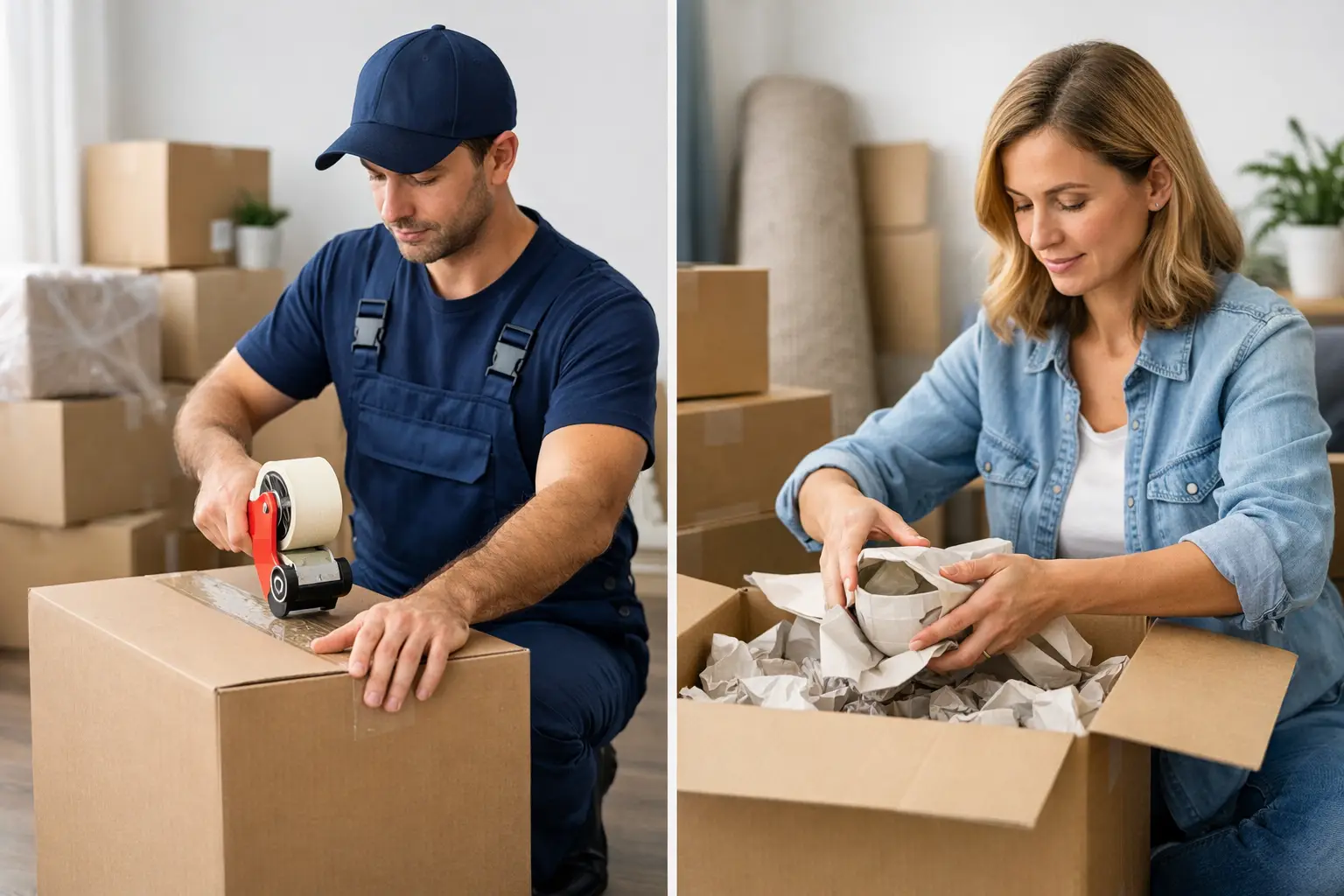
A professional packing service is more than arriving with boxes on moving day. A trained team packs your belongings using suitable cartons, wrapping and protective materials, labels boxes by room and prepares furniture or fragile items for transport. Depending on the booking, they may also dismantle beds, wardrobes and other larger pieces, then reassemble them at the new property.
This is particularly useful when you have a family home, a busy work schedule or a move with a fixed completion date. Packing a two or three-bedroom house properly can take far longer than expected, especially when cupboards, loft spaces, garages and sheds are included.
Professional packers work to a system. Heavy items go into smaller boxes, lighter items into larger ones, and delicate belongings are wrapped and secured to reduce movement in transit. That does not make damage impossible, but it gives your possessions a far better level of protection than rushed packing with mismatched boxes and newspaper.
A full packing service is also useful for customers moving at short notice. If contracts have exchanged late, a tenancy ends unexpectedly, or you need to be out of a property quickly, packing support can turn an unmanageable week into a workable moving plan.
Packing service vs self packing: the real cost difference
Self packing usually looks cheaper because you are paying only for boxes, tape, bubble wrap and your own time. For a small, organised flat move, that can be the sensible route. You can collect boxes gradually, pack room by room and keep spending under control.
The hidden cost is the time involved. Most people underestimate how long it takes to sort, wrap, label and pack everything they own. You may also need to buy more materials than planned after discovering that books, kitchenware, clothes and fragile items require separate boxes and protection.
Poor packing can create further costs. Overfilled cartons split, loose items scratch, and unlabeled boxes make unloading slower. If the removal team has to wait while you finish packing on the day, the move can become more stressful and may take longer than your original schedule allows.
A packing service is an additional cost, but it is a known cost. When it is included in a fixed-price removal quote, you can decide upfront whether the time saved and the added protection are worth it. This is often more attractive than taking unpaid time off work, losing several evenings to packing, or paying for last-minute supplies.
When self packing makes sense
Self packing is not a bad option. It works well when your move is small, you have enough lead time and you are comfortable handling the preparation. A studio, one-bedroom flat or lightly furnished rental is usually manageable if you begin early.
It can also suit people who want complete control over personal documents, jewellery, collectibles and private belongings. You may prefer to pack these items yourself even if professionals handle the rest of the property.
The key is to be realistic. If you choose self packing, start several weeks before moving day where possible. Pack non-essential items first, such as books, seasonal clothes, decorations and spare kitchen equipment. Keep a clearly marked essentials box for medicines, chargers, documents, toiletries, tea and coffee, basic cleaning supplies and the first night in your new home.
Use strong boxes and avoid making them too heavy to lift safely. Label every box with its room and a brief description of the contents. Writing “kitchen” on ten cartons is less useful than “kitchen - plates and mugs” or “kitchen - pantry items”. That small amount of organisation makes delivery and unpacking much quicker.
When a packing service is worth paying for
A professional service is often the better value when time is tight or the volume of belongings is high. Larger homes, family moves and office relocations all involve more items than people first expect. Children’s rooms, paperwork, electronics, glassware and stored possessions can add days to the job.
It is also a strong option if you are moving long distance, combining households or placing possessions into storage. In those situations, boxes may be handled more than once. Proper wrapping, clear labels and suitable cartons matter more because there are more loading and unloading stages.
Consider a packing service if any of these situations apply:
- You are exchanging contracts or handing back keys on a tight deadline.
- You have fragile furniture, artwork, glassware, mirrors or valuable electronics.
- Work, childcare, health needs or travel leave little time to pack safely.
- You are moving from a larger property with a loft, garage, shed or storage unit.
- You need an out-of-hours or same-day move and cannot prepare everything in advance.
There is also a practical benefit that is easy to overlook: decision fatigue. Moving involves utilities, address changes, key collection, cleaning, paperwork and coordinating other people. Handing over the packing can free you to focus on the decisions that only you can make.
A middle option: part packing
You do not have to choose between packing every item yourself and paying for a full-house pack. Part packing gives you a more flexible option. You pack straightforward items such as clothes, books and bedding, while a professional team handles the kitchen, glassware, mirrors, pictures and other fragile belongings.
This approach can keep the price lower while still removing the jobs that cause the most worry and take the most care. It is particularly useful for households that are organised but short on time in the final days before a move.
You can also pack personal and sensitive items yourself, then ask for help with everything else. Passport folders, legal papers, jewellery, sentimental items and essential medication are normally best kept with you during the move rather than loaded into the removal vehicle.
Protection, insurance and responsibility
The quality of packing affects more than convenience. It can affect how well items stand up to transport and, in some cases, how a damage claim is assessed. If you pack your own boxes, make sure they are properly sealed, not overloaded and suitable for stacking. A carton filled with loose glass or a bin bag full of heavy items creates unnecessary risk for everyone handling it.
Before booking, ask what insurance cover applies and whether there are different terms for owner-packed and professionally packed items. Read the details rather than assuming every item is covered in the same way. Be clear about high-value belongings, awkward access, fragile furniture and anything requiring specialist handling.
At HomeGo Removals & Packing, the practical aim is simple: agree the level of support before moving day, provide a fixed-price quote where possible, and make sure the team arrives prepared for the work. That matters whether you need a full pack, help with selected rooms or removal transport only.
Questions to ask before deciding
A quick look at your calendar is often more useful than comparing prices alone. How many free evenings do you genuinely have before the move? Have you included cupboards, outdoor storage and the items you use every day? Will you still have time to clean, arrange handover and deal with last-minute issues?
Also consider access at both properties. Narrow staircases, top-floor flats, limited parking and long walks from the door all add pressure on moving day. If packing runs late, these access issues can make a difficult day harder.
Ask for a clear quote that separates removal, packing materials, packing labour, dismantling and reassembly where needed. Transparent pricing helps you compare like for like. The cheapest quote is not always the lowest overall cost if it leaves you buying materials, taking time off work or dealing with avoidable breakages.
Make the choice that protects your moving day
If you have a small move, plenty of notice and a sensible packing plan, self packing can save money and work perfectly well. If your move is larger, urgent or already competing with work and family commitments, professional packing can buy back valuable time and reduce risk.
The best option is the one that leaves you ready when the removal team arrives. Choose the level of help that fits your budget, protect the items that matter most, and do not leave the packing decision until the final week.
Get a free fixed written quote in 2 mins
Insurance up to £50,000 included · No cancellation fees · Free dismantling & reassembly

Our team of fully-insured removal specialists helps families across Slough, Windsor, Maidenhead and the wider Berkshire area move home every week. We pack, load, drive and unload boxes every day — every guide on this blog comes from real jobs, not theory.
Reviewed & fact-checked by Allah Nazar Ihsan — Founder & Managing Director, HomeGo Removals & Packing Ltd
Planning your move?
Get a free, no-obligation written quote from Berkshire's trusted independent removers. We're answering the phone right now — 24 hours a day, 7 days a week.