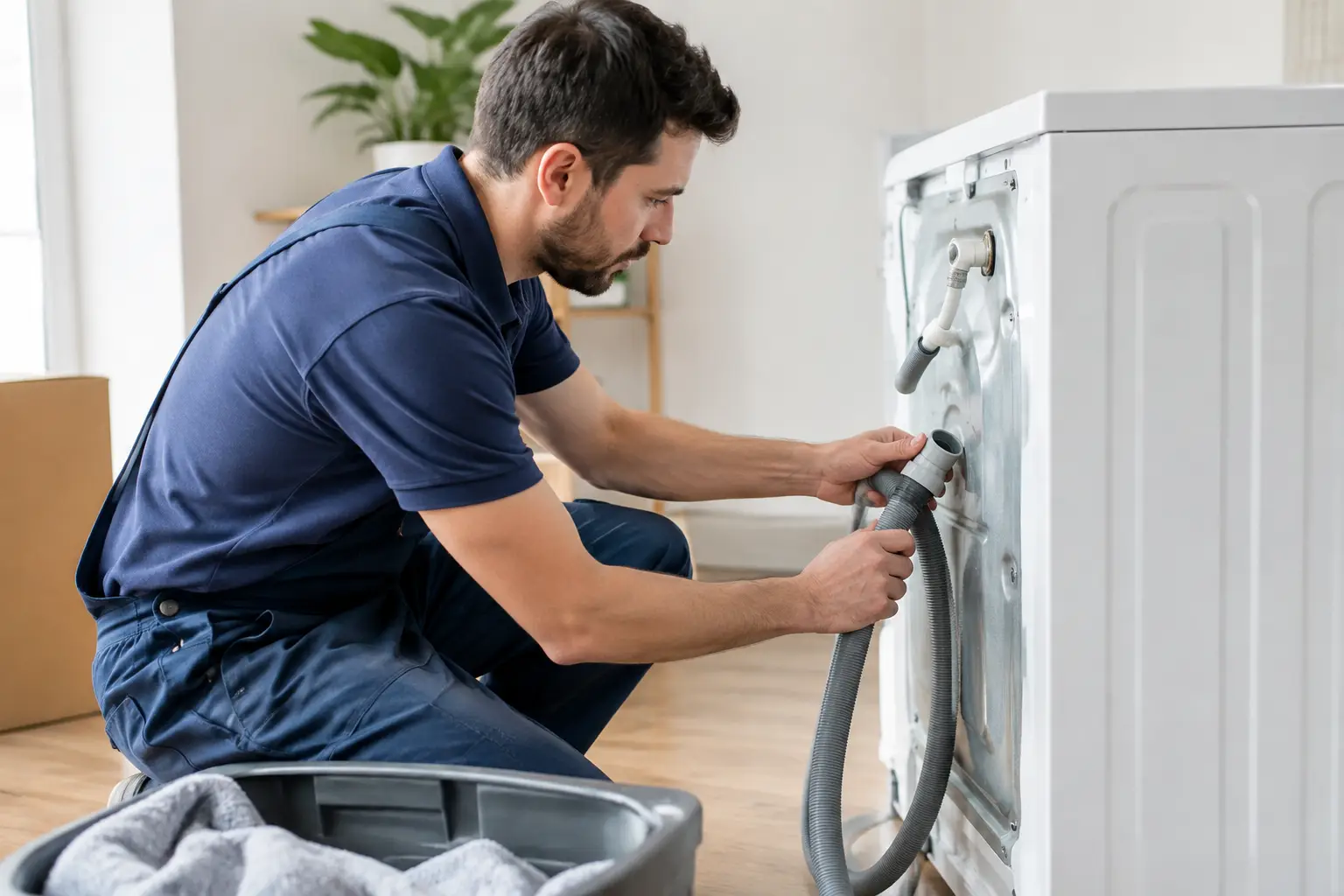
Who Disconnects Washing Machines Before a Move?
Who disconnects washing machines before a house move? Learn when to use a plumber or mover, what is safe to do yourself, and how to prevent leaks safely.
A washing machine is one of the easiest items to overlook until moving day. It is heavy, connected to water and electricity, and can cause a costly leak if it is disconnected carelessly. So, who disconnects washing machines when you are moving house? Usually, it depends on the service booked, the condition of the plumbing and how confident you are handling the job.
In many cases, a qualified plumber or appliance engineer is the safest choice. Some removals companies may offer disconnection as an added service, but this should never be assumed. Always confirm what is included in your quote before the team arrives.
Who Disconnects Washing Machines During a House Move?
There is no single rule that applies to every move. A washing machine can be disconnected by the homeowner or tenant, a plumber, an appliance engineer, or sometimes a removals team if they specifically offer this service.
A professional remover’s main job is to safely carry, load, transport and unload your belongings. They may be happy to move a washing machine once it is isolated, drained and ready to go. However, plumbing connections are not automatically included in a standard house removal.
This matters because a washing machine has two water hoses, a waste hose and an electrical connection. If a valve is stiff, a hose is damaged or a fitting is already leaking, forcing it loose can create problems just as you are trying to leave the property.
When a Plumber Is the Best Option
Book a plumber or appliance engineer if the washing machine connections are difficult to access, show signs of corrosion, or have leaked in the past. It is also sensible to use a professional if the machine is built into kitchen units, sits beneath a worktop with limited room, or is part of a utility room installation with several appliances.
A plumber can isolate the water supply properly, disconnect the hoses without damaging fittings and check that the pipework is secure afterwards. This is particularly useful for landlords and tenants who need to leave the property in good condition at the end of a tenancy.
You may also need a professional if the appliance is hardwired rather than plugged into a normal socket. Electrical work should not be treated as a moving-day shortcut.
Can You Disconnect It Yourself?
You can disconnect a washing machine yourself if it has standard, accessible connections and you are comfortable doing basic household tasks. The key is not to rush it. Moving day is busy, and a poorly drained machine can spill water through a hallway, onto flooring or into the removal vehicle.
First, switch the appliance off at the mains and unplug it. Turn off both water isolation valves behind the machine. These are normally small valves on the hot and cold water pipes, although many modern machines only use a cold-water supply.
Place towels and a shallow tray beneath the hose connections. Unscrew the inlet hoses slowly, as there will usually be some trapped water inside. Then remove the waste hose from the standpipe or waste connection, keeping it raised until you can drain it into a bucket.
Once disconnected, wipe up any water and secure the hoses to the back of the machine. Do not leave them loose where they can snag, bend or damage the appliance during lifting.
How to Prepare a Washing Machine for Removal
Disconnecting the machine is only one part of the job. A washing machine needs to be prepared properly before it is carried downstairs or loaded into a van.
The most important step is draining it fully. Run a drain or spin programme before moving day, then empty the filter if your model has one. Check the manufacturer’s instructions, as the filter is often behind a small panel near the bottom front of the machine. Keep towels ready because residual water can still come out.
If possible, allow the washing machine to dry with the door slightly open overnight. This reduces trapped moisture and prevents stale smells during transport. On the morning of the move, close and secure the door.
Many washing machines also require transit bolts. These bolts lock the internal drum in place and help protect the suspension while the machine is being moved. If you still have the original bolts, fit them according to the appliance manual. If you no longer have them, check whether replacements are available for your make and model before the move.
Never lie a washing machine on its front if it can be avoided. Keeping it upright is generally safest for the drum and internal components. Your removal team will also need clear access, so measure tight doorways, staircases and turns in advance if the appliance is being moved from an upstairs kitchen or utility area.
What Removals Companies Usually Handle
A removals company can safely move a prepared washing machine using the right lifting equipment, protective covers and a suitable vehicle. This avoids the strain and risk of attempting to manoeuvre a heavy appliance yourself.
What they handle before transport varies by company and booking type. Some firms can provide appliance disconnection and reconnection through an arranged specialist service. Others will require the machine to be fully disconnected before collection. A man-and-van booking may also have different inclusions from a full house removal.
Ask these questions when requesting a quote:
- Is washing machine disconnection included, available as an extra, or excluded?
- Will the team carry the machine from an upper floor or difficult access point?
- Can they transport it upright and secure it in the vehicle?
- Is reconnection at the new property available?
- What happens if the machine cannot be disconnected safely on the day?
Clear answers prevent delays, unexpected charges and arguments over responsibility. A fixed-price removal quote is useful, but only if the quote reflects the actual work required.
Reconnecting at the New Property
Do not assume that because a washing machine was disconnected successfully, it can immediately be reconnected in the new home. Check the space, pipe positions and waste connection before arranging installation.
The appliance must sit level. If it rocks on the floor, adjust the feet before using it. An unlevel washing machine can vibrate excessively, move during a spin cycle and put pressure on hoses and fittings.
Connect the inlet hose or hoses without overtightening them, position the waste hose correctly and turn the water supply back on slowly. Before pushing the machine fully into place, inspect each connection for drips. Then run a short rinse or test programme while staying nearby.
If you have travelled a long distance or the machine was tilted during handling, it can be wise to let it stand upright for a few hours before switching it on. This gives internal fluids time to settle and reduces the chance of damage.
Tenants, Landlords and Letting Agents
For tenants, the responsibility can depend on whether the washing machine belongs to you or was supplied with the property. If it is your own appliance, you normally need to arrange safe disconnection and removal, while leaving the plumbing intact and clean.
If the appliance belongs to the landlord, do not remove or disconnect it without permission. Report any issue with leaking hoses, faulty valves or damaged connections to the landlord or letting agent. Taking photos before and after disconnection is sensible where there is any doubt about the condition of the installation.
Landlords preparing a property between tenancies should consider using a professional where appliances are supplied. A quick safety check can avoid water damage, complaints from new tenants and an emergency callout later.
Avoid These Common Moving-Day Mistakes
The biggest mistake is waiting until the removal team is outside before testing the valves. Check everything at least a day before the move. If a valve will not turn or the waste hose is sealed into place, you have time to arrange help rather than holding up the whole job.
Do not transport the machine while it is full of water, and do not forget the transit bolts if your manufacturer requires them. Avoid wrapping the machine before the hoses are completely dry, as trapped moisture can mark surfaces or create unpleasant odours.
Finally, do not leave the old water connections open once the appliance has gone. If you are not fitting another machine straight away, make sure the supply valves are fully closed and the area is dry.
A washing machine is manageable when it is planned early. Confirm who is responsible for disconnection, prepare the appliance before moving day and use a plumber whenever the connection looks anything other than straightforward. That small bit of preparation keeps the move moving and helps you arrive at the new place without an avoidable leak to deal with.
Get a free fixed written quote in 2 mins
Insurance up to £50,000 included · No cancellation fees · Free dismantling & reassembly

Our team of fully-insured removal specialists helps families across Slough, Windsor, Maidenhead and the wider Berkshire area move home every week. We pack, load, drive and unload boxes every day — every guide on this blog comes from real jobs, not theory.
Reviewed & fact-checked by Allah Nazar Ihsan — Founder & Managing Director, HomeGo Removals & Packing Ltd
Planning your move?
Get a free, no-obligation written quote from Berkshire's trusted independent removers. We're answering the phone right now — 24 hours a day, 7 days a week.